A good before and after comparison shows teeth that are visibly lighter, still look like yours, and stay that way for a sensible length of time. Professional in-chair whitening can deliver a clear change in a single appointment. How far your teeth move depends on the type of stain, your starting shade and how you look after them afterwards. This guide explains what the change looks like, what shapes it, and how to read a before and after photo without being misled.
TL;DR
- Professional in-chair whitening can lighten teeth noticeably in one visit. Take-home trays usually take longer to reach a similar point.
- Surface stains from coffee, tea and red wine and yellowing from age tend to respond well. Stains from inside the tooth, such as those linked to certain medications or fluorosis, respond less predictably.
- Sensitivity is the most common side effect and is usually short-lived. Preparation and aftercare make a real difference.
- Results are not permanent. They typically last from one to a couple of years, depending on diet, smoking and oral hygiene.
- At SmileBar, the Triple Action 60 minute session is $199 and the Ultra Bright 90 minute session is $249.
Table of Contents
- What a whitening before and after really shows
- How many shades can teeth change?
- What decides your result
- In-chair vs take-home: how the results compare
- What to expect on the day
- Choose your session
- How to prepare for the best result
- Sensitivity and aftercare
- How long do the results last?
- Which stains respond, and which may not
- Reading a before and after gallery critically
- Who gets the most from whitening
- FAQ
- Sources
What a whitening before and after really shows
Most before and after images compare two photos of the same smile: one taken before treatment and one taken shortly after. The difference you see is a change in tooth shade, which dental professionals measure against a shade guide, a set of tooth-coloured tabs ranging from lighter to darker.
Whitening does not change the structure of your teeth, and it does not alter fillings, crowns, veneers or bonding. It lightens natural tooth surfaces. That is why a strong result on natural teeth can sit beside restorations that now look a shade too dark. A good provider flags this at the consultation, not after the photo is taken.
Three things make a before and after photo meaningful:
- Same lighting and angle. A warm bulb before and a bright flash after can exaggerate the change.
- Same distance and camera settings. Close-ups on one tooth can mislead.
- Timing. Teeth are slightly dehydrated straight after a session and can look chalkier or whiter than they will a day or two later. A photo taken within minutes of the treatment shows the peak, not the settled result.
When you scroll through a gallery, look for consistency like this. If every photo has different lighting, treat the numbers attached to it with caution.
How many shades can teeth change?
You will see claims ranging from a couple of shades to eight or more. Treat the high end as a best case, not a promise. There is no single standard protocol for whitening across clinical research, which makes it hard to compare one study’s results with another’s. Different gels, strengths, contact times and shade guides all produce different numbers.
What holds true across the field is more useful than any single figure:
- Teeth that start darker or more yellow have more room to move, so the change can look dramatic.
- Teeth that are already light will show a smaller visible change, even if the treatment works well.
- Two people having the same treatment can finish on different shades, because enamel thickness, natural dentine colour and stain history all differ.
Australian dental guidance also cautions that online marketing for direct-to-consumer whitening products often promotes unrealistic results. If an advertised result sounds too good for a kit you can buy online, it probably is. For a realistic target, ask your provider what shade range they expect for your teeth specifically.
What decides your result
Type of stain
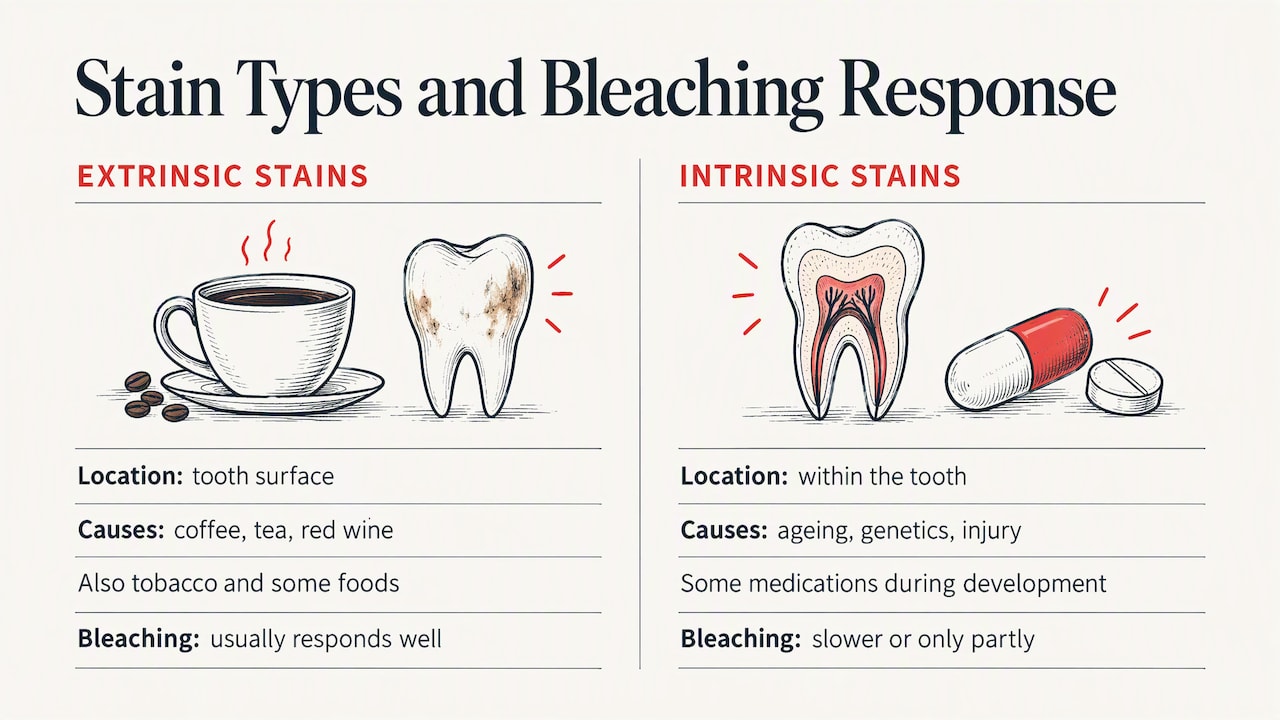
Stains fall into two broad groups. Extrinsic stains sit on the surface and come from things like coffee, tea, red wine, tobacco and some foods. Intrinsic stains form within the tooth, and can come from ageing, genetics, injury, or certain medications taken while teeth were developing.
Surface stains and the gradual yellowing that comes with age usually respond well to bleaching. Deep intrinsic discolouration can respond more slowly or only partly. That is not a failure of the treatment. It is the reason a consultation matters: a professional should work out what is causing the discolouration before predicting how it will look afterwards.
If you are curious about specific cases, we have written about fluorosis and why bleaching alone often falls short and about whitening a dead tooth with internal bleaching before crowns. Both explain why a single, standard whitening session is not always the right tool.
Your starting shade
A yellow-toned smile typically shows the most dramatic before and after. Grey-toned teeth tend to lighten less readily. Your provider can usually tell you which category you fall into by looking at your teeth under good light.
The gel and the technique
In Australia, products with more than 6% hydrogen peroxide or more than 18% carbamide peroxide are limited to registered dental practitioners under the Australian Dental Association’s policy. That is why strong in-chair whitening is delivered in a clinical setting, and why the stronger gels you cannot buy over the counter are the ones that deliver the biggest single-session changes.
Light or lamp assistance gets plenty of marketing attention. Professional dental bodies say it can speed the process but does not make teeth whiter than the gel alone would. The gel strength, the application and the time on the tooth do the real work.
Your habits afterwards
The photo shows the day-one result. What your teeth look like at month six depends largely on what you drink and eat, whether you smoke, and how well you clean your teeth. More on that below.
In-chair vs take-home: how the results compare
Healthdirect Australia explains that in-chair whitening can make teeth whiter after one appointment, while take-home treatment takes longer, and that the final result is not necessarily better or worse either way. The main difference is speed and control.
| In-chair session | Take-home trays | |
|---|---|---|
| Time to visible change | One appointment | Days to weeks |
| Gel strength | Higher, applied by a trained operator | Lower, used by you |
| Control | Application managed for you | Depends on your consistency |
| Best for | Events, deadlines, a fast reset | A gradual change over time |
| Typical before and after | Clear difference the same day | Gradual, builds over repeated use |
For busy people and anyone with a date in the diary, the single-visit result is usually the deciding factor. If you are working to a deadline, our guide to same day teeth whitening in Australia covers what to expect, and the lunch break whitening page explains what fits in 60 to 90 minutes.
One warning on DIY options: the ADA lists gum damage, mouth ulcers and stomach upset among the risks of direct-to-consumer whitening kits, and notes that applying them over undiagnosed cavities can irritate the nerve. Whitening over an undiagnosed problem is the main reason a before and after photo can come with a painful backstory.
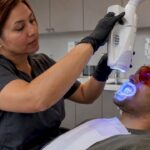
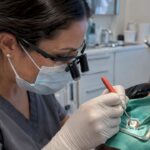
What to expect on the day
Here is the usual flow for an in-chair appointment, so the “during” part of your before and after is clear:
- Consultation and shade check. Your starting shade is recorded, and your teeth, gums and any restorations are assessed. This is the point to mention sensitivity, past dental work, and any medical conditions.
- Protection. Gums and soft tissue are protected before any gel is applied.
- Gel application. The professional-strength gel goes on in timed rounds.
- Rinse and final shade check. The gel is removed, and your result is compared with the starting point.
- Aftercare briefing. You are told what to avoid and for how long.
At SmileBar, you can see the process laid out on our treatments page. Our consultation is built to tailor the session to you, and we focus on keeping sensitivity to a minimum.
Choose your session
We offer two in-chair options, both using the highest-grade whitening gel allowed by law:
- Triple Action, 60 minutes: $199. A solid choice if your teeth are already fairly light, you want a refresh, or you have a tight schedule.
- Ultra Bright, 90 minutes: $249. Our longer, intensive session, aimed at the whitest result that still looks natural. It suits long-term coffee and red wine drinkers, or anyone preparing for a big event.
With more than 10,000 procedures performed since 2011, our team has seen the full range of starting points. You can book a session or buy a gift voucher on our website, and our pricing guide explains how professional whitening is priced more broadly.
If you are unsure which session fits, the guide to how many whitening sessions you need is a good place to start. Planning for a wedding? Our wedding day smile tips cover timing. Treating a partner as well? See couples’ teeth whitening.
How to prepare for the best result
The “before” part of your before and after is something you can influence. Here is what helps:
- Have a dental check first if it has been a while. Cavities, cracks and exposed roots can make whitening uncomfortable, and they should be dealt with before bleaching.
- Tell your provider about sensitivity. If your teeth already zing with cold drinks, say so. Sensitive teeth can usually still be whitened with a tailored approach. Our page on whitening sensitive teeth explains the options.
- Skip heavy staining in the day or two before. There is no need to go to extremes, but a morning of black coffee and a red wine the night before is not helping.
- Brush and floss normally. Clean teeth let the gel contact the surface evenly.
- Check your timing. Whitening is not recommended during pregnancy, and dentists generally advise waiting. See our page on pregnancy teeth whitening.
Also check the work in your mouth. If you have visible crowns or veneers on front teeth, they will not change colour, so ask how your natural teeth will compare afterwards.
Sensitivity and aftercare
The ADA identifies transient tooth sensitivity and soft tissue irritation as the most common side effects of peroxide whitening products, usually during or soon after treatment. For most people it settles quickly. Some reviewers also suggest that remineralising agents such as fluoride may help protect enamel and ease post-treatment sensitivity, which is why many providers recommend a fluoride-containing toothpaste afterwards.
Practical steps for the first couple of days:
- Choose lighter-coloured, plain foods and drinks. Our guide on what to eat after teeth whitening and what to avoid has a full list.
- Avoid very hot and very cold drinks if your teeth feel tender.
- Use a toothpaste for sensitive teeth if your provider suggests one.
- Avoid smoking. It is one of the fastest ways to undo your result.
- If your gums look white, sore or burned, contact your provider. Our page on treating burned gums after whitening explains what is normal and when to get advice.
Persistent or severe pain is not something to wait out. See your dentist.
How long do the results last?
Research reviews on bleaching suggest the colour change generally holds for somewhere between one and two and a half years. That range is wide because of lifestyle. Frequent coffee, tea, red wine, tobacco and poor oral hygiene all bring the colour back sooner. Recurrence is also more common with severe intrinsic staining, such as tetracycline discolouration.
To keep your before and after looking like an “after”:
- Rinse with water after coffee, tea or red wine.
- Use a straw for dark drinks where practical.
- Brush twice a day and floss.
- Keep up regular dental cleans, which remove surface build-up.
- Plan a touch-up if you notice colour creeping back, rather than waiting until it is back to square one.
Our teeth whitening maintenance guide goes through this in more detail, including at-home care that fits with a professional session.
Which stains respond, and which may not
Yes, yellow teeth can be whitened. General medical guidance says yellowish age-related stains usually respond quickly, and stains from smoking or coffee may respond too. Discolouration from tetracycline taken in childhood, or from trauma, is less predictable.
There is another route for a tooth that has darkened from the inside after root canal treatment: internal bleaching, where the bleach is placed inside the tooth for a number of days. That is a dentist’s procedure and a different treatment from a cosmetic in-chair session.
The practical point is that your photo gallery will be full of the easy wins, because those make the best photos. Ask your provider honestly where your teeth sit on that spectrum.
Reading a before and after gallery critically
Before you book, spend five minutes with any provider’s gallery and ask:
- Are the photos taken in the same light, at the same angle?
- Do the images show a range of starting shades, or only the most yellow ones?
- Are the people real clients of that clinic, not stock images?
- Does the provider say what shade change they recorded, or only show the pictures?
- Do they explain what was done, how long the session ran and what gel was used?
Also ask about what was not whitened. Crowns, veneers and fillings will not change, and an honest provider will say so.
Who gets the most from whitening
The people who tend to be happiest with their before and after are those with surface staining from coffee or red wine, those with gentle age-related yellowing, and those with a specific date in mind. If you drink a lot of coffee, a professional session followed by sensible habits gives you a strong reset. If you have a wedding, graduation or job interview coming up, a single visit fits the schedule better than weeks of trays.
People with extensive dental work on front teeth, deep intrinsic staining or untreated dental problems should see a dentist first. A good provider will tell you that, even when it means no booking.
FAQ
How long does tooth whitening last?
Research suggests results typically hold for about one to two and a half years. Coffee, tea, red wine and smoking shorten that, while good oral hygiene and sensible habits stretch it. A top-up session can bring the colour back.
Is it worth getting my teeth whitened?
It is worth it if you have surface stains or age-related yellowing and want a visible change without altering your teeth. It is less useful for crowns, veneers and some deep intrinsic stains. A consultation will tell you which camp you fall into.
Can yellow teeth actually be whitened?
Yes, in most cases. Yellowing from age, coffee and tobacco usually responds well to bleaching. Discolouration caused by some medications, trauma or fluorosis can respond less predictably and may need other treatment.
How long does it take to see the effects of teeth whitening?
With in-chair whitening you can see a difference after one appointment, which is why it suits events and deadlines. Take-home treatment works more slowly, over days or weeks. Teeth can look slightly different the next day as they rehydrate.
Sources
- Teeth Whitening Maintenance: How to Keep Your Results
- Steps for Our Simple Teeth Whitening Treatments
- How Much Does Professional Teeth Whitening Cost?
- Teeth Whitening Treatments for Sensitive Teeth
- What to Eat After Teeth Whitening and What to Avoid
Recommended
- Teeth Whitening Maintenance: How to Keep Your Results
- Same Day Teeth Whitening in Australia: What to Expect
- When Can You Whiten Teeth After Braces?
- All You Should Know About Teeth Whitening Procedure