Bleaching can lighten mild-to-moderate fluorosis stains, but it rarely erases them on its own. A systematic review and meta-analysis found that combining bleaching with resin infiltration achieves roughly a 75% success rate for masking fluorotic spots, well above bleaching alone. Severe cases with pitted enamel generally need veneers or crowns instead. The right path always starts with a dental assessment, since severity determines which approach actually works.
TL;DR:
- A dentist should examine enamel thickness and check for decay, gum disease, cracks, restorations, and sensitivity before bleaching, since untreated problems can worsen with whitening.
- The reported success rate measures whether spot color falls within an acceptable difference, but small trials and varied methods limit direct comparisons.
- In Australia, products above 6% hydrogen peroxide require a registered dental practitioner, and whitening should follow an oral exam and documented consent.
- Office bleaching takes under two hours, while home trays usually require one to two weeks; sensitivity generally settles within a day or two.
Table of Contents
- What is dental fluorosis and how severe does it get?
- What causes fluorosis and when does it develop?
- Can teeth whitening help fluorosis?
- What does the research say about bleaching versus resin infiltration?
- Comparing the treatment options for fluorosis stains
- How dentists decide what is safe and appropriate for you
- What to expect during treatment and recovery
- A practitioner’s view on treating fluorosis realistically
- How we can help with fluorosis-related discolouration
- FAQ
- Sources
What is dental fluorosis and how severe does it get?
Dental fluorosis is a developmental change in tooth enamel that shows up as white opacities, streaky patches, or in more severe cases, brown staining and visible pitting. It happens while teeth are still forming under the gums, long before they erupt, so the pattern is set before you ever see it in the mirror.
Dentists grade fluorosis on a spectrum from mild to severe. Mild fluorosis usually means faint white flecks or lines that only an attentive observer would notice. Moderate fluorosis brings more obvious white or cream-coloured patches across the enamel surface. Severe fluorosis involves brown discolouration, rough or pitted enamel, and sometimes structural weakness. This grading matters because it directly shapes which treatment is realistic: a conservative approach that works beautifully on mild staining will usually underwhelm on severe, pitted enamel.
What causes fluorosis and when does it develop?
Fluorosis develops when a child absorbs more fluoride than their forming teeth can handle, typically between birth and around eight years of age, while the permanent teeth are still developing under the gumline. Once the enamel has matured and the tooth erupts, the pattern is permanent.
Common sources include fluoridated community water in areas with naturally high fluoride levels, fluoride supplements taken without a dentist’s guidance, and young children swallowing fluoride toothpaste instead of spitting it out. None of this reflects anything parents did wrong; it is usually a matter of combined exposure across several ordinary sources. For prevention, supervising brushing in children under six and using a pea-sized smear of toothpaste are the simplest safeguards.
Can teeth whitening help fluorosis?
Bleaching works by using peroxide to break down pigment molecules in enamel and the layer beneath it, which lightens the overall tooth colour. The catch with fluorosis is that the white or brown marks are not just surface stains. They sit in porous, hypermineralised patches of enamel that scatter light differently to the surrounding tooth, which is why bleaching alone can lighten the whole tooth without necessarily blending those patches in.
Results tend to follow severity:
- Mild fluorosis often responds well to bleaching alone, since the discolouration is shallow and the colour difference is small to begin with.
- Moderate fluorosis gives mixed results with bleaching alone and often needs a second treatment layered on top for the patches to disappear.
- Severe fluorosis, especially with pitting, sees limited benefit from bleaching because structural enamel loss is not something bleach can fix.
In Australia, this is also a regulated area. Healthdirect notes that whitening should be carried out by a dental professional after an oral exam, and products above 6% hydrogen peroxide are restricted to registered dental practitioners under Australian Dental Association policy.
What does the research say about bleaching versus resin infiltration?
The clearest picture comes from a 2024 systematic review and meta-analysis comparing bleaching, resin infiltration and combination therapy for fluorotic lesions.
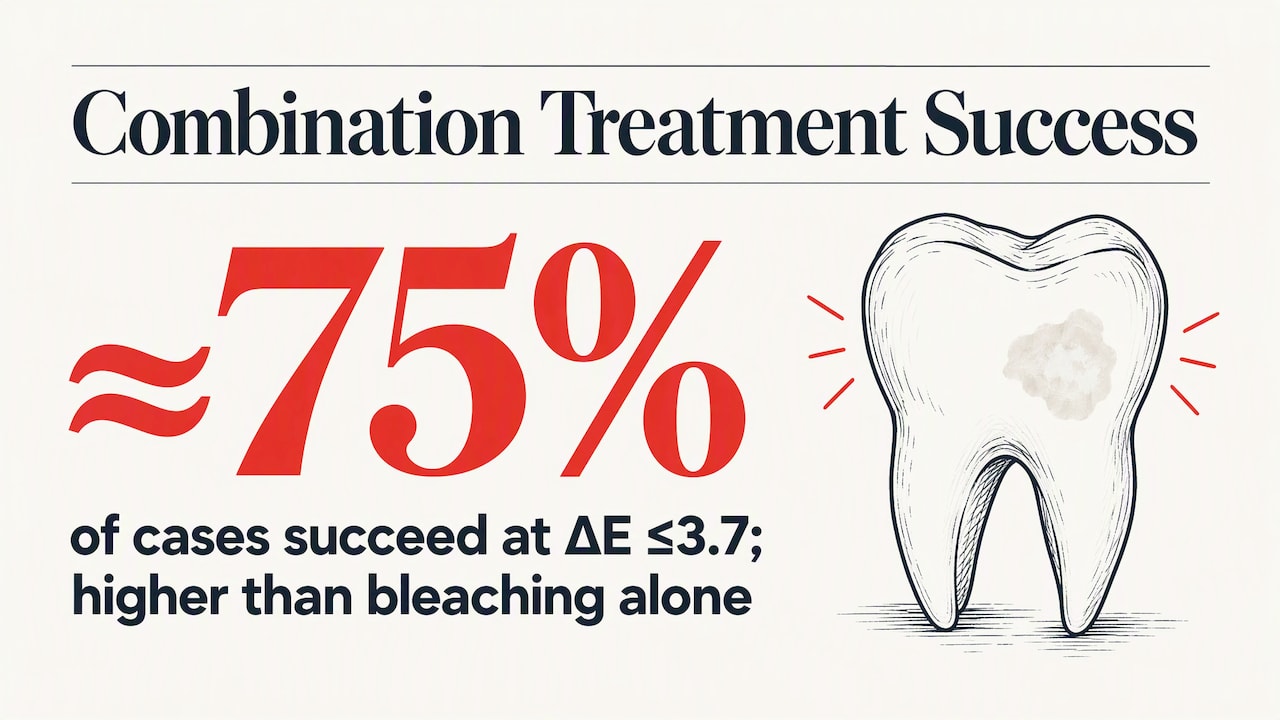
Combining bleaching with resin infiltration achieves close to a 75% success rate for bringing the colour difference between the fluorotic spot and surrounding enamel below the threshold considered clinically acceptable (a ΔE of 3.7 or less), according to the same review. That is a meaningfully higher success rate than bleaching used by itself.
A separate meta-analysis looking at aesthetic improvement on a visual analogue scale found resin infiltration, whether used alone or alongside other techniques, generally outperforms bleaching alone for mild-to-moderate fluorosis. Both reviews flag the same caveats worth keeping in mind: the underlying trials are often small, study designs vary enough to make direct comparisons tricky, and none of this replaces an individual clinical assessment of your own enamel.
Comparing the treatment options for fluorosis stains
Treatment choice comes down to how deep the discolouration sits and how much enamel structure is involved.
- Bleaching is non-invasive and works best on superficial staining; it is often used first and then followed by infiltration if patches remain visible.
- Microabrasion removes a thin, controlled layer of enamel to physically eliminate shallow spots; it is conservative but does remove some tooth structure, so a dentist needs to judge enamel thickness first.
- Resin infiltration works by penetrating the porous subsurface of a fluorotic lesion and matching enamel’s refractive index, which optically masks white spots rather than removing them, as described in research on resin infiltration mechanisms; it tends to perform best on mild-to-moderate lesions and particularly well when combined with bleaching.
- Veneers and crowns are reserved for severe cases with enamel loss or pitting; they are more invasive and irreversible but give predictable, lasting coverage.
Clinicians typically follow a step-up sequence: start with the least invasive option that could plausibly work, usually bleaching, then add resin infiltration if the match is not close enough, and only move to veneers or crowns when the enamel itself is structurally compromised, a pattern reflected in a broader review of fluorosis treatment approaches.
Pro Tip: Ask your dentist to photograph your teeth under natural light before starting treatment, so you have an objective baseline to compare against once bleaching or infiltration is finished.
How dentists decide what is safe and appropriate for you
Before recommending whitening, a dentist checks for gum disease, untreated cavities, enamel cracks, existing restorations like fillings or crowns, and any history of tooth sensitivity. Whitening over unresolved decay or exposed dentine can cause problems, which is why this exam always comes first rather than being optional.
In Australia, this assessment is not just good practice but a regulatory requirement. The Australian Dental Association’s policy restricts supply and use of whitening products above 6% hydrogen peroxide to registered dental practitioners, and expects documented informed consent before treatment begins. In practice, this means:
- A dentist examines your teeth and gums for contraindications before any bleaching gel is applied.
- You receive a realistic estimate of expected improvement based on your specific fluorosis grade.
- Higher-strength whitening gels are only supplied and applied under professional supervision.
This is also covered in more detail in our guide to what to know before your first whitening treatment.
What to expect during treatment and recovery
Timelines vary by method. In-chair bleaching sessions typically run under two hours and show visible results immediately. Take-home trays usually need one to two weeks of nightly use. Microabrasion is generally a single short appointment, while resin infiltration is also typically completed in one visit per tooth, sometimes combined with bleaching beforehand for the best colour match.
The most common side effect across all these methods is transient tooth sensitivity, which usually settles within a day or two, along with occasional mild gum irritation if gel contacts soft tissue. We cover management strategies for sensitive teeth in our guide to whitening with sensitivity concerns. For lasting results, avoiding heavily pigmented foods and drinks for the first 48 hours and keeping up a normal oral hygiene routine helps maintain the improvement. More detail on the full process is in our overview of the teeth whitening procedure.
A practitioner’s view on treating fluorosis realistically
Conservative, staged treatment tends to leave patients more satisfied than chasing a perfect match in one step. Across more than 10,000 whitening procedures, the clearest pattern we have seen is that setting expectations around fluorosis grade before treatment prevents disappointment afterwards. A 90 minute Ultra Bright session can lighten surrounding enamel meaningfully, but it is one part of a broader plan for anyone with moderate or patchy fluorosis.
— Matthew
How we can help with fluorosis-related discolouration
We offer two in-clinic options worth discussing at a consultation: the SmileBar Triple Action 60 minute session at $199 and the SmileBar Ultra Bright 90 minute session at $249, both using the highest-grade whitening gel permitted under Australian regulation and delivered under professional supervision to keep sensitivity to a minimum.
For fluorosis specifically, we assess your staining pattern first and talk through whether bleaching alone will get you there or whether a referral for resin infiltration makes more sense alongside it. If a brighter, more even smile is the goal, book a consultation and we will map out what is realistic for your teeth.
This article is general information, not a substitute for advice from a qualified doctor. Consult a qualified healthcare professional about your own circumstances before acting on anything here.
FAQ
Can fluoride whiten teeth?
No, fluoride does not whiten teeth. Fluoride strengthens enamel against decay, but excess fluoride exposure during tooth development is actually what causes fluorosis staining in the first place.
Can yellow teeth turn white again?
Yellow staining from food, drink or ageing typically responds well to professional bleaching, since it sits closer to the enamel surface than fluorosis marks do. Fluorosis-related white or brown patches need a different approach, since they often require resin infiltration alongside or instead of bleaching, according to a 2024 meta-analysis.
Which organ is affected by fluoride?
Fluoride’s relevance to fluorosis is specifically about developing tooth enamel, where excess exposure during childhood disrupts normal mineralisation and causes the visible staining pattern. This article focuses on that dental effect rather than broader health questions, which sit outside dental treatment guidance.
Can you treat dental fluorosis?
Yes, fluorosis can be treated, and the approach depends on severity. Mild cases often respond to bleaching alone, moderate cases often need bleaching combined with resin infiltration for a reported success rate near 75%, and severe cases with enamel loss usually need veneers or crowns.
Sources
- Masking efficacy of bleaching and/ or resin infiltration of fluorotic spots on anterior teeth – a systematic review and meta-analysis
- Meta-analysis: resin infiltration outcomes vs bleaching for fluorosis
- Teeth whitening | healthdirect
- Policy Statement 2.2.8 – Teeth whitening (Bleaching) By Persons other than Dental Practitioners | Australian Dental Association
Recommended
- Professional, In-Chair Teeth Whitening Sydney
- Why Choosing A Professional Teeth Whitening Is Important
- Professional, In-Chair Teeth Whitening Melbourne