For couples who want safety and predictable results, the fastest route is a professionally supervised in-clinic session for both people, or a dentist-supplied at-home kit when a clinic visit isn’t practical. We offer professional sessions suitable for couples built around a supervised whitening approach. High-strength whitening gels need dental supervision, which is why the clinic route tends to outperform DIY kits for shared results.
TL;DR:
- A shared clinic booking takes 60 to 90 minutes; each person receives an individual exam and shade record, since crowns and fillings will not whiten.
- At home, trays supplied by a dentist match gel to each person, while retail kits use fixed, lower concentrations and suit mild staining.
- In Australia, only registered dental professionals may use or supply products above 6% hydrogen peroxide, so stronger home gel must come through a dental provider.
- Ask whether a provider assesses each partner, keeps separate shade records, explains sensitivity care, and supplies a written plan; avoid guaranteed shade promises before examination.
Table of Contents
- Couples whitening options: in-clinic, mobile, and at-home kits, which fit you both
- What a professional couples session looks like, step by step
- At-home kits for couples: safe use, limits, and coordinating a shared regimen
- Managing sensitivity and safety: what the research shows and what professionals do
- Decision checklist: how to choose the best shared whitening option for you both
- Why shared whitening can be a thoughtful gift or shared pre-event ritual
- SmileBar couples-friendly services and how to book
- FAQ
- Sources
Couples whitening options: in-clinic, mobile, and at-home kits, which fit you both
Couples generally choose between three paths: an in-clinic professional session, a mobile technician visit, or at-home kits designed for two people. Each comes with its own pace, cost, and oversight level, and the right one depends on what you both need from the experience.
In-clinic sessions are the quickest way to see a visible shade change, often within a single appointment, because registered dental professionals can use higher-strength gel under direct supervision. Mobile services bring a technician to a shared location, which suits couples who want a joint experience without clinic travel, though gel strength and protocols vary by provider. At-home kits for two spread the process over one to two weeks of nightly use, with gradual rather than immediate change.
- In-clinic professional session: fastest visible results, typically one visit, highest gel strength under supervision.
- Mobile technician visit: convenient shared setting, moderate speed, oversight depends on the provider’s qualifications.
- At-home kits for couples: slowest but flexible, lower-strength gel, best for mild staining or budget-conscious pairs.
Couples with tight schedules or an upcoming event tend to prefer in-clinic sessions, while those with sensitive teeth or existing restorations benefit from a professional assessment first, since fillings and crowns do not change color and can create mismatched results if ignored. If you do share an at-home kit, use separate trays or strips and avoid swapping mouthpieces, since shared applicators raise hygiene concerns.
What a professional couples session looks like, step by step
A shared appointment still starts with two individual check-ins. Each person gets a separate shade reading and a quick exam to flag any restorations, gum sensitivity, or cracked teeth before gel goes anywhere near enamel, a step Healthdirect and the American Dental Association both treat as essential for safe whitening.
From there, the process generally follows the same sequence for each person:
- Lips and gums are isolated with a protective barrier to limit gel contact with soft tissue.
- Whitening gel is applied to the front surfaces of the teeth.
- The gel sits for a measured interval, often broken into shorter cycles rather than one long application.
- Teeth are rinsed and checked, with the shade recorded again for comparison.
- A final shade match is noted for each person’s individual chart, not a shared result.
A shared booking for two people commonly runs 60 to 90 minutes total, with each person often seeing several shades of improvement by the end of the session. Both partners typically leave with the same basic aftercare guidance: avoid deeply pigmented food and drink for the first day or two, and expect some short-term sensitivity.
Pro Tip: Book back-to-back appointments rather than a single combined slot, so each person gets a clean, unhurried shade check instead of a rushed shared one.
At-home kits for couples: safe use, limits, and coordinating a shared regimen
At-home options split into two categories: dentist-supplied custom trays and over-the-counter kits or strips. Custom trays are fitted to each person’s teeth and typically use a gel strength a dentist has calibrated for that individual, while OTC kits use one-size trays or strips at a fixed, lower concentration.
This difference matters for a legal and safety reason. Only registered dental professionals in Australia are permitted to use or supply products above 6% hydrogen peroxide, so any stronger gel needs to come through a dental provider rather than a retail shelf.
For couples sharing a kit, a few practical habits keep results even and hygienic:
- Never swap trays or applicators between partners, even if your teeth are a similar size.
- Keep each person’s gel syringe and tray labeled separately to avoid mixing concentrations.
- Track each person’s wear time independently, since sensitivity and response speed often differ between partners.
Couples with more significant staining, visible restorations, or a history of sensitive teeth tend to get steadier, safer results from dentist-supplied trays rather than an OTC kit picked up without an assessment.
Managing sensitivity and safety: what the research shows and what professionals do
Sensitivity is the most common side effect of whitening for both partners, and it’s usually temporary. A randomized clinical trial found that a desensitizing gel containing 5% potassium nitrate and 5% glutaraldehyde, applied before in-office bleaching, significantly reduced the incidence and severity of sensitivity without affecting how well the whitening worked. A separate trial found that preemptive use of 400 mg ibuprofen paired with a desensitizer reduced immediate post-bleaching sensitivity compared with a placebo.
Temporary tooth sensitivity and gingival irritation are the most commonly reported side effects of whitening treatment.
Professionals lower risk through a handful of techniques: gingival barriers that keep gel off soft tissue, gel strength matched to each person’s dentition, staged application cycles instead of one long exposure, and desensitizing agents offered before or after treatment. A supervised session also means contraindications, like cracked teeth or active gum disease, get caught before gel touches them rather than after sensitivity sets in. That oversight is the main reason a professional route carries a lower chance of adverse effects than two people experimenting with high-strength product at home.
Decision checklist: how to choose the best shared whitening option for you both
Before booking anything together, walk through a short checklist as a couple:
- Does either of you have restorations, cracked teeth, or gum disease that needs checking first?
- How sensitive are your teeth normally, and does either partner have a history of sensitivity?
- Is there a date, like an event or a trip, that sets your timeline?
- What’s your combined budget, and do you want the fastest result or the most gradual one?
- Will you both be available for any recommended follow-up or touch-up session?
When you call a provider, ask whether they perform an individual assessment for each person, what gel concentration they use, what they do to manage sensitivity, and whether they keep separate shade records for you and your partner. Watch for red flags: no assessment offered, no written treatment plan, or a guaranteed shade result promised before anyone has looked at your teeth. A provider who skips these steps is skipping the part that keeps whitening safe.
Why shared whitening can be a thoughtful gift or shared pre-event ritual
There’s something to be said for sitting through a whitening session next to the person you’re with, comparing shade charts afterward instead of doing it solo. We have a signature Ultra-White Treatment designed for shared appointments, and have observed couples booking it ahead of special occasions or as gifts. Choosing professional supervision keeps that moment safe as well as memorable.
— Matthew
SmileBar couples-friendly services and how to book
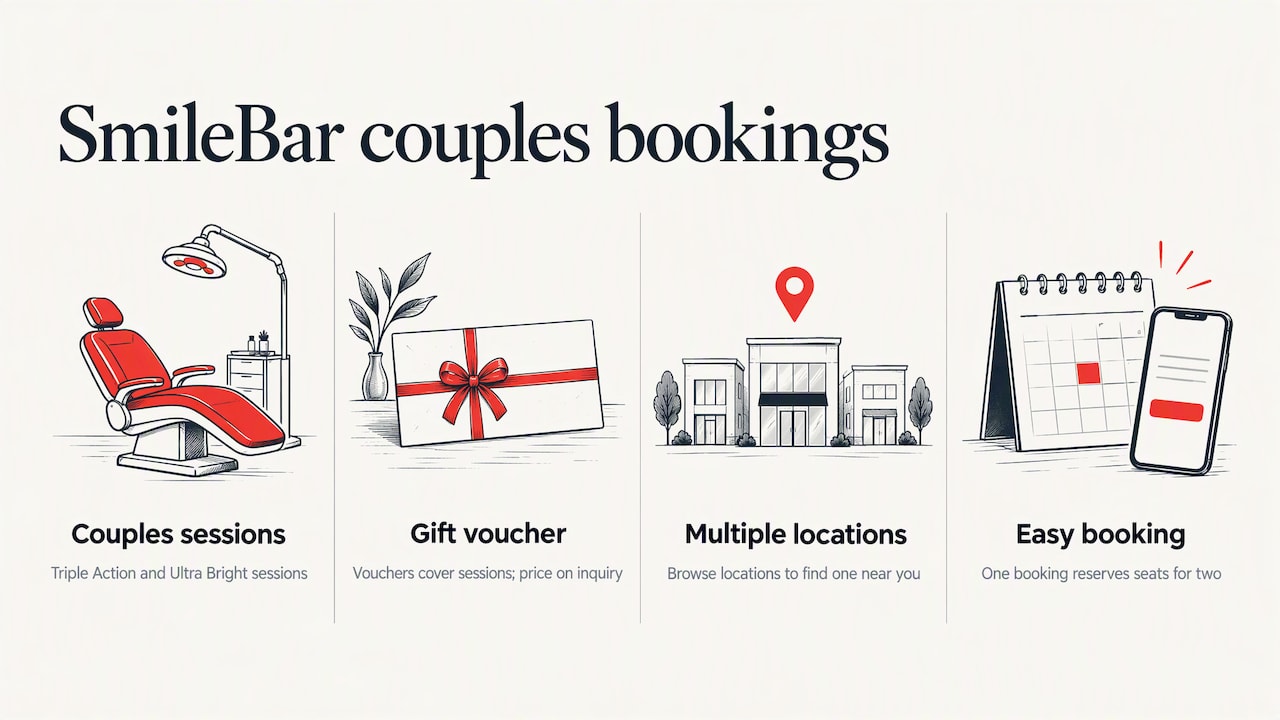
Two people, one booking, no guesswork about gel strength: that’s the practical appeal of whitening together at a clinic built for it. Our SmileBar Triple Action session and SmileBar Ultra Bright session are available, with prices and details provided on our website, using legally permitted whitening gel and tailored consultations. Prefer to surprise your partner instead? SmileBar Gift Vouchers are available to cover sessions, with pricing details provided upon inquiry.
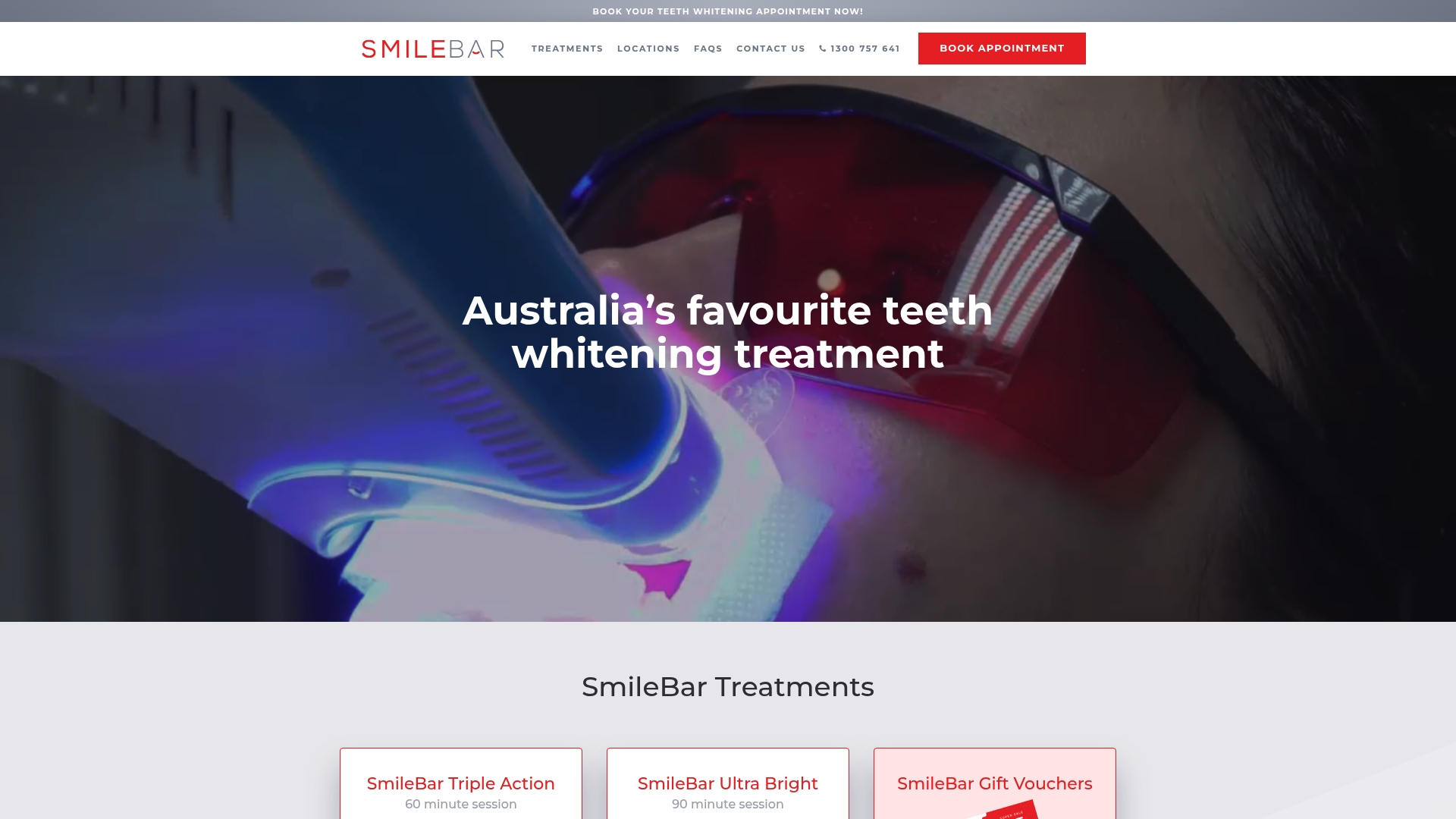
With multiple clinic locations, we aim to accommodate your schedules without requiring compromises on timing. Browse our teeth whitening treatments and locations to find a clinic near you and book a shared appointment.
This article is general information, not a substitute for advice from a qualified doctor. Consult a qualified healthcare professional about your own circumstances before acting on anything here.
FAQ
What is the 2 2 2 rule for teeth?
The “2 2 2 rule” is a popular shorthand some people use for post-whitening care: avoid staining food or drinks for 2 hours, limit heavily pigmented items for 2 days, and ease back into normal habits over roughly 2 weeks. It’s not an official dental guideline, so treat it as a rough memory aid rather than a clinical standard, and follow the specific aftercare instructions your provider gives you.
Is $500 teeth whitening worth it?
Whether a session at that price is worth it depends on what’s included, such as a professional assessment, the gel strength used, and whether sensitivity management is part of the plan. A session that includes individual shade recording, barriers to protect gums, and desensitizing options generally offers more value than a flat-rate treatment with none of those steps.
What does Kim Kardashian use to whiten her teeth?
Celebrity whitening routines are not published clinical information, and results depend heavily on an individual’s teeth, any existing restorations, and the strength of product used under professional supervision. The safer comparison point is what a registered dental professional recommends after assessing your own teeth, rather than a public figure’s reported routine.
What is the average cost of teeth whitening in Australia?
Pricing varies by provider and treatment length, so there’s no single published national average. Our own sessions are priced individually, for example the SmileBar Triple Action 60 minute session at $199 AUD one-off and the SmileBar Ultra Bright 90 minute session at $249 AUD one-off, both available through our treatment pages.
Sources
- Teeth whitening | healthdirect
- Whitening | American Dental Association
- Effect of an experimental desensitizing agent on reduction of bleaching-induced tooth sensitivity – The Journal of the American Dental Association
Recommended
- Teeth Whitening Before Wedding: Your Timeline
- Avoid These 14 Common Teeth Whitening Mistakes!
- When Can You Whiten Teeth After Braces?
- What to Eat After Teeth Whitening & What to Avoid