For most people, a professional whitening session is a once-or-twice-a-year job, not a monthly habit. How often you top up depends on your enamel, how much coffee, tea or red wine you drink, whether you smoke, and how well your teeth respond to the first treatment. The goal is not to whiten as often as you can. It is to whiten as rarely as you need to, so your teeth stay bright, natural-looking and comfortable.
Below, we explain how to work out your own rhythm, what a sensible schedule looks like, the warning signs of overdoing it, and how to stretch the results of each session.
TL;DR
- There is no single interval that suits everyone. A professional session followed by a top-up once or twice a year suits many people, but your enamel and habits set the real schedule.
- Results fade gradually rather than disappearing overnight. Staining habits and daily care decide how fast.
- Persistent sensitivity, sore gums or a chalky, see-through look are signs to stop and get a dental check, not to whiten again.
- Daily care between sessions (fluoride toothpaste, cleaning between teeth, a good brush) does more for long-term brightness than extra whitening.
- Book your session at least a couple of days before a big event, so any sensitivity has settled.
Table of Contents
- Why there is no one-size-fits-all answer
- A realistic whitening schedule
- How long results last
- Signs you are whitening too often
- What can and cannot be whitened
- In-clinic, take-home or supermarket: how method affects frequency
- Do you really need a “white diet”?
- Make each session last longer
- Timing whitening around big events
- Our perspective: fewer sessions, done well
- Book a session when your shade tells you it is time
- FAQ
- Sources
Why there is no one-size-fits-all answer
Search this question and you will find advice ranging from “once a year, whatever the method” to “every few months with care”. The spread is real, and it exists because the answer depends on several things that differ from person to person:
- Your natural tooth shade. Teeth that start darker or more yellow often have more room to lighten, and may look like they need a second pass sooner.
- Your enamel. Thinner or more porous enamel can be more prone to sensitivity and may stain faster.
- Your diet and habits. Daily coffee, black tea, red wine, cola and smoking all push shade back toward where it started.
- The method. An in-clinic session, a professional take-home kit and a supermarket strip behave differently, and so do their risks.
- Your oral health. Untreated decay, gum recession or worn enamel change what is safe.
That is why a good provider asks questions before they pick up any gel. Frequency is a personal setting, not a rule.
A realistic whitening schedule
Here is how most of our clients end up thinking about it. Treat it as a starting point, not medical advice.
| Your situation | A sensible approach |
|---|---|
| First-time whitening | One professional session. Wait and see how your teeth look and feel over the following weeks before deciding on more. |
| Light drinker of coffee or wine, good daily care | A top-up when you notice the shade drifting, often months later rather than weeks. |
| Daily coffee, tea or red wine, or a smoker | Shade tends to drift back sooner. A top-up once or twice a year may suit, with maintenance habits in between. |
| Big event coming up | Book at least two days ahead. If you have never whitened before, give yourself more time than that. |
| Teeth sensitive after your last session | Wait. Don’t repeat until sensitivity is fully gone, and talk to your dentist if it lingers. |
If you want to know how many sessions it takes to reach your target shade in the first place, we cover that in our guide on how many teeth whitening sessions you need.
How long results last
Whitening is not permanent. The effect gradually fades as everyday staining builds up on the enamel again. Many people find a noticeable result lasts anywhere from several months to a couple of years, and the spread comes down to the factors above: your starting shade, diet, smoking and how you look after your teeth.
Two practical points follow from this:
- You do not need to keep whitening to keep healthy teeth. If you are happy with your shade, you can simply stop. Fading does not harm your teeth.
- Top up when you notice, not on a timer. Booking a repeat session because the calendar says so is how people end up over-whitening.
Signs you are whitening too often
Over-whitening is the real reason “how often” matters. Watch for:
- Sensitivity that does not settle. Mild, short-lived sensitivity can happen after whitening. If it hangs around for more than a day or two, or gets worse, stop and see your dentist.
- Gum irritation. White patches, soreness or a burning feeling along the gumline mean gel has contacted soft tissue. Don’t continue.
- A translucent, grey or glassy look at the edges of your teeth. This can be a sign the enamel is being pushed too far.
- A shade that looks flat or unnaturally bright. Chasing a whiter and whiter result rarely looks better. Natural teeth have some variation, and a very uniform white often reads as artificial.
If any of these sound familiar, the answer is a pause and a professional check, not another round. Our guide to whitening teeth when you have sensitivity goes through what helps.
What can and cannot be whitened
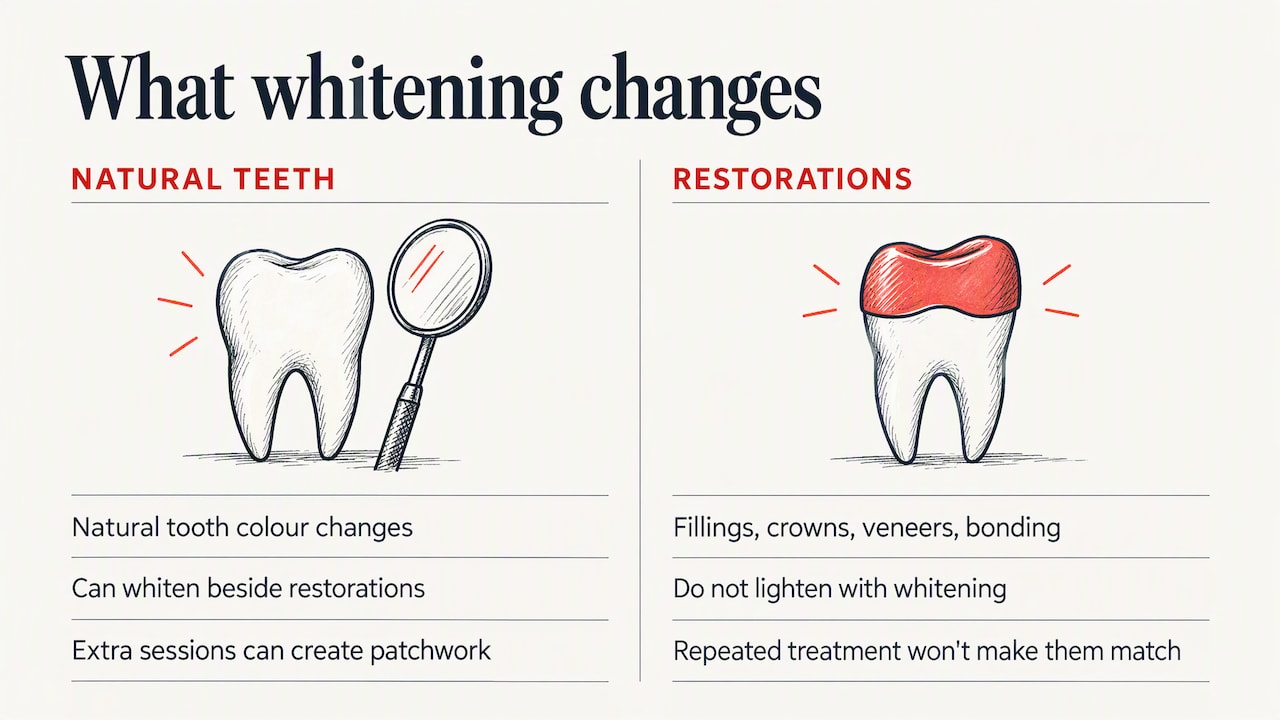
Whitening only changes the colour of natural tooth structure. Fillings, crowns, veneers and bonding will not lighten, so repeated treatment will not make them match. If you have visible restorations at the front of your mouth, extra sessions can leave you with a patchwork effect: whiter natural teeth next to unchanged restorations. Mention any dental work at your consultation so the plan is realistic before you spend anything.
It also pays to have your teeth and gums in good shape first. Decay or gum disease can make whitening uncomfortable, and they are worth treating regardless. A regular check-up is the simplest way to catch them, and we explain why in the importance of regular dental check-ups.
In-clinic, take-home or supermarket: how method affects frequency
In-clinic sessions
A professional session is controlled, supervised and done in one visit. Because it is a single concentrated treatment, it naturally suits spacing out: you whiten, enjoy the result, and come back when your shade has drifted. It is usually the least fiddly way to manage frequency, since you cannot over-apply by accident at home.
Professional take-home kits
Take-home kits spread treatment over days or weeks. They are handy for maintenance, but they are also where people go wrong, by wearing them longer or more often than the instructions say. If sensitivity appears, the usual advice from practitioners is to pause for a day or two and shorten the wear time rather than push through.
Over-the-counter strips, pens and toothpastes
These are lower strength and are often used repeatedly, which is where frequency problems come from. Daily use of a stronger-than-needed product, or leaving strips on too long, can irritate gums and teeth. Whitening toothpastes mainly lift surface stains and are best used in moderation, with a regular fluoride toothpaste the rest of the time. We look at the topic in more detail in are teeth whitening strips safe and the 14 most common whitening mistakes.
Do you really need a “white diet”?
Many people assume they must give up coffee and wine forever after whitening. Recent research reviews suggest a strict colour-free diet may matter less than people think, which is welcome news if your morning flat white is non-negotiable.
That said, a little common sense still helps, especially in the first couple of days:
- Red wine is the usual culprit. Its colour combined with acidity makes it the drink most likely to dull a fresh result. A straw reduces contact with your front teeth.
- Rinse with water after coffee, tea or wine.
- Wait before brushing after acidic drinks, so you don’t scrub softened enamel.
- Avoid smoking, which stains quickly and undoes the work.
Our guide to what to eat after teeth whitening has a practical list.
Make each session last longer
The best way to reduce how often you need whitening is to protect the result. Daily care matters more than any product:
- Brush twice a day with a fluoride toothpaste.
- Clean between your teeth daily. Plaque and surface film dull the shade just as stains do.
- Use a decent brush. An electric toothbrush can make thorough cleaning easier, and this piece on daily habits for a whiter smile covers simple routines that help.
- Book regular dental check-ups and cleanings. Professional scale and polish removes build-up that brushing misses.
- Keep top-ups for when you actually see a change.
For more on the basics, see our five dental hygiene tips.
Timing whitening around big events
Weddings, job interviews, photo shoots, milestone birthdays: these are the most common reasons people come to us. A few timing rules keep you comfortable and looking your best:
- Book at least two days before the event. Teeth can feel a little sensitive for a day or two after treatment, and you want that behind you on the day.
- Don’t try it for the first time the day before. If you have never whitened, leave a bigger buffer so you know how your teeth react.
- Plan your top-up, not a panic repeat. If you whitened six months ago and your shade has faded, a single maintenance session ahead of the event is far better than several in a row.
Our perspective: fewer sessions, done well
We have performed over 10,000 whitening procedures since 2011, and the same pattern keeps showing up. The people who are happiest with their smile a year later are not the ones who whitened the most. They are the ones who had a proper consultation, had a single well-done session, and looked after their teeth afterwards.
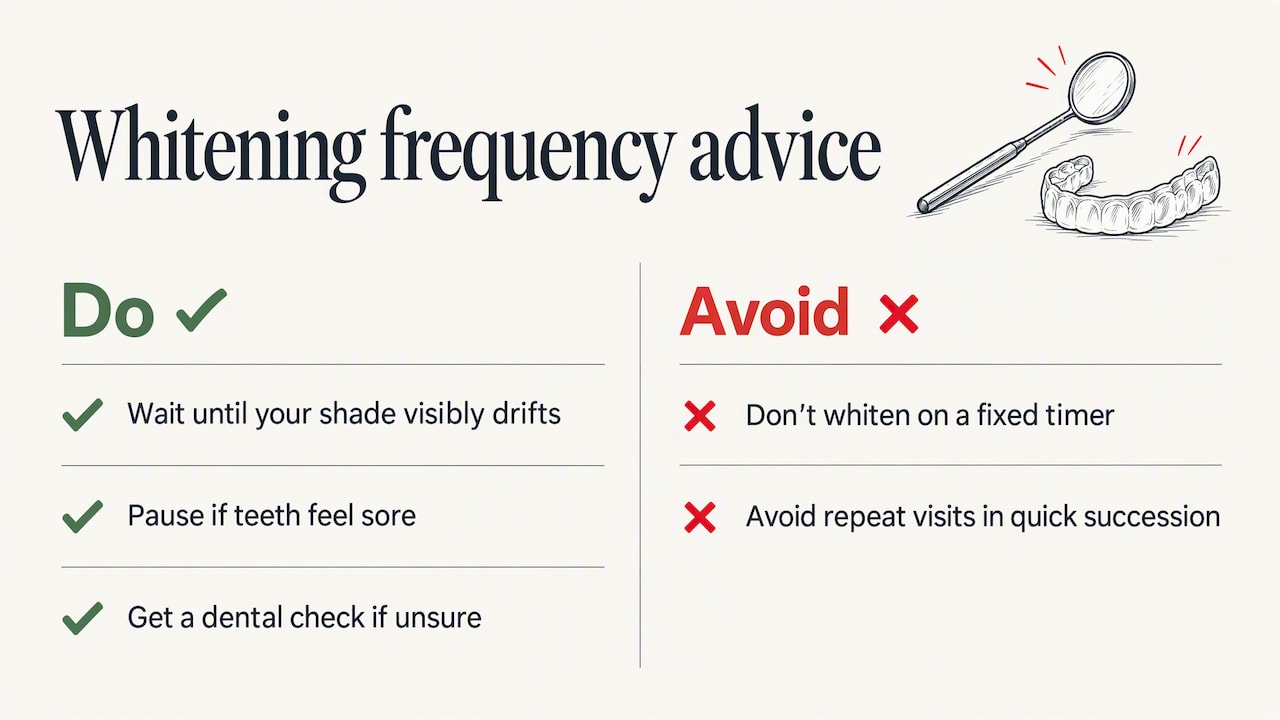
That is why we focus on two things. First, we use the highest-grade whitening gel allowed by law and advanced equipment, so one session can deliver a strong result without needing repeat visits in quick succession. Second, we work to keep sensitivity low, because comfortable teeth are teeth you will actually want to look after.
Our advice on frequency is simple. Whiten, enjoy it, and wait until you genuinely see your shade drift before you top up. If your teeth feel sore, your gums are irritated or you are unsure, pause and get a dental check. A whiter smile is never worth a sore one.
— Matthew
Book a session when your shade tells you it is time
If you are ready for a professional result, we offer two in-clinic options:
- Triple Action, 60 minutes: $199.
- Ultra Bright, 90 minutes: $249, our intensive session for the whitest yet natural-looking result.
Both start with a consultation so the treatment suits your teeth. You can see both options and book on the SmileBar site, or read how our treatment steps work. Whitening for someone else? We also sell gift vouchers, a good fit for birthdays and anniversaries. For a breakdown of what affects the price, see how much professional teeth whitening costs.
FAQ
Can I whiten my teeth every month?
For most people, no. Repeating whitening that often raises the risk of sensitivity and gum irritation without much extra benefit. If your teeth look like they need more work soon after a session, talk to a dental professional before repeating.
How long should I wait between professional whitening sessions?
There is no fixed number, because it depends on your enamel, diet and habits. Many people top up once or twice a year, and some go longer. A good rule is to wait until you can clearly see the shade has faded, and until any sensitivity from the last session has gone.
Is it bad to whiten teeth too often?
It can be. Overuse is linked with ongoing sensitivity and irritated gums, and chasing an ever-whiter shade can look unnatural. If you notice persistent sensitivity or sore gums, stop whitening and see your dentist.
Will whitening work on my crowns and fillings?
No. Only natural tooth structure lightens, so crowns, veneers and fillings stay the same colour. Tell us about any dental work at your consultation so we can set realistic expectations.
Should I avoid coffee and red wine after whitening?
You probably do not need to cut them out entirely, but go easy in the first couple of days. Red wine is the most likely to dull a fresh result, so a straw and a water rinse help. Good daily brushing and cleaning between teeth will do more over the long run.
Sources
This guide draws on the whitening, sensitivity and aftercare advice we publish on our own site:
- Teeth Whitening Treatments for Sensitive Teeth
- What to Eat After Teeth Whitening & What to Avoid
- How Many Teeth Whitening Sessions Do You Need?
- Are Teeth Whitening Strips Safe?
- Avoid These 14 Common Teeth Whitening Mistakes
- The Importance of Regular Dental Check-Ups