If your problem is plaque, tartar or gum health, you need a professional cleaning. If your teeth are already clean but you dislike their colour, whitening is the procedure that solves that. The sensible order is assessment and cleaning first, then whitening once your mouth is healthy and your real tooth shade is clear.
TL;DR:
- Crowns, veneers, and fillings do not bleach, so visible front restorations can look mismatched; ask a dentist about shade matching before treatment.
- Only registered dental professionals may use products above 6% hydrogen peroxide, and whitening is not recommended during pregnancy or breastfeeding.
- Clinic whitening can change shade in one supervised visit, while custom trays take one to two weeks and over the counter products offer milder results.
- Whitening can cause temporary sensitivity and mild gum irritation, usually settling within a few days; rinse promptly and alert your clinician if gel stings.
- If you had a cleaning recently, have no front restorations, and have healthy gums, you may be able to proceed directly to whitening.
Table of Contents
- What is teeth cleaning: goals, steps and who performs it
- What is teeth whitening: how it works and who it’s for
- Key differences: purpose, procedure, duration and safety
- Which to do first and a clinician’s quick checklist
- Safety and side effects and how professionals minimise them
- Whitening options: in-chair, dentist-supplied trays, OTC products
- When restorations affect your choice and when to see a dentist first
- Research and practitioner note: what the evidence shows
- Author’s practical perspective for three common scenarios
- Why choose SmileBar for professional whitening
- FAQ
- Sources
What is teeth cleaning: goals, steps and who performs it
Professional cleaning, known clinically as scaling and polishing, is a preventive and therapeutic procedure carried out by a dentist or dental hygienist. It removes plaque and calculus (hardened tartar) from the tooth surface and along the gum line, areas a toothbrush cannot reach once deposits harden.
A typical appointment involves an examination, scaling with hand instruments or an ultrasonic device to break up calculus, then polishing to smooth the enamel and lift surface stain from coffee, tea or tobacco. Several signs point to needing a cleaning rather than a cosmetic fix:
- Bleeding or puffy gums when you brush or floss
- Visible tartar buildup near the gum line
- Persistent bad breath that doesn’t resolve with brushing
- A rough or gritty feeling on the back of your teeth
Cleaning can noticeably brighten teeth by stripping away stained deposits and returning enamel to its natural shade, but that’s different from bleaching beyond your baseline colour, a distinction Healthdirect draws clearly in its guidance on cosmetic whitening.
Pro Tip: Book a cleaning every six months even if your teeth look fine. Tartar forms below the gum line long before it’s visible or uncomfortable.
What is teeth whitening: how it works and who it’s for
Whitening, or bleaching, is a cosmetic procedure that changes the colour of natural tooth enamel using peroxide-based agents, typically hydrogen peroxide or carbamide peroxide, which break down stain molecules within the tooth structure. Unlike cleaning, it doesn’t treat disease, it changes shade.
There are three common delivery methods:
- In-chair treatments using higher-strength gel applied by a clinician in a single visit
- Dentist-supplied take-home trays with a measured, lower-strength gel used over consecutive nights
- Over-the-counter strips, pens or whitening toothpaste, generally the mildest and slowest option
Before starting, a clinician checks for fillings, crowns or veneers, since these restorations won’t change colour with bleaching and can end up looking mismatched against newly whitened enamel. Healthdirect notes that whitening isn’t suitable for everyone and that only registered dental professionals may legally use products above 6% hydrogen peroxide. Results typically last months rather than years and fade gradually with normal eating, drinking and smoking habits, which is why most people need periodic touch-ups to maintain the shade.
Key differences: purpose, procedure, duration and safety
Cleaning and whitening solve different problems, and mixing them up is the most common reason people end up disappointed with either one.
- Purpose: Cleaning addresses gum health and plaque control, a health issue; whitening addresses tooth colour, a cosmetic preference
- Procedure: Cleaning uses scaling and polishing tools over roughly 30 to 60 minutes; whitening uses peroxide gel activated in-chair or worn in trays, from a single session to several weeks
- Duration of results: Cleaning results last until new plaque and tartar accumulate, generally reviewed every six months; whitening fades gradually over months depending on diet and habits
- Safety profile: Cleaning carries minimal risk beyond brief gum tenderness; whitening commonly causes temporary tooth sensitivity and gum irritation, which the American Dental Association lists among the most frequent side effects
Choosing the wrong one first rarely causes harm, but it does waste money: whitening over inflamed gums or heavy tartar produces patchy, unreliable results.
Which to do first and a clinician’s quick checklist
Assessment and cleaning almost always come before whitening because active gum disease, visible tartar or unknown restorations can all distort the result. A dentist needs to see your true baseline shade and confirm your gums are healthy enough to tolerate bleaching gel without excess irritation.
- Book a check-up and cleaning if it’s been more than six months since your last one
- Flag any crowns, veneers or front fillings so your dentist can plan around them
- Ask whether your gums show any inflammation that needs treating first
- Confirm your true tooth shade after cleaning, not before
- Discuss realistic colour goals and sensitivity tolerance before booking
Exceptions exist. If you’ve had a cleaning recently, have no restorations up front and no gum concerns, you may be able to move straight to whitening without another round of scaling.
Safety and side effects and how professionals minimise them
The two most common whitening side effects are temporary tooth sensitivity and mild gum irritation, both of which the American Dental Association identifies as the typical adverse effects, usually settling within a few days of finishing treatment.
- Tooth sensitivity to hot or cold, usually temporary
- Mild gum or soft-tissue irritation where gel contacts tissue
- Rare chemical burns from gel left on gum tissue too long
Whitening isn’t recommended during pregnancy or breastfeeding, and active gum disease should be treated first rather than masked. Clinics reduce risk through careful gum isolation before applying gel, calibrated gel concentrations, and shorter application times for people prone to sensitivity, a point covered in more detail in guidance on managing sensitivity during whitening. For advice on soft-tissue irritation specifically, see this guidance on gum irritation during whitening.
Pro Tip: If gel contacts your gums and stings, rinse immediately and tell your clinician rather than waiting it out.
Whitening options: in-chair, dentist-supplied trays, OTC products
Each method trades speed against control and cost.
- In-chair whitening delivers the fastest, most noticeable shade change in a single supervised session, with a clinician managing concentration and gum protection throughout
- Dentist-supplied take-home trays whiten gradually over one to two weeks using custom-fit trays, giving you control over pace and sensitivity
- OTC strips and whitening toothpaste offer the mildest results, mainly lifting surface stain rather than changing the tooth’s underlying shade, and typically take weeks of consistent use
If you want a visible result before a specific date, in-chair treatment suits that goal best. If you’re sensitive to gel or prefer a gentler pace, take-home trays are the middle ground, and this guide to session numbers covers what to expect timeline-wise.
When restorations affect your choice and when to see a dentist first
Crowns, veneers and composite fillings don’t respond to bleaching gel, only natural enamel does. Whitening your natural teeth around existing restorations can expose a visible mismatch, since the restoration stays its original shade while the rest of your smile lightens.

If you have visible front restorations, see a dentist before booking whitening. A clinical exam, shade matching and a short discussion about whether any restorations need replacing for a consistent result will save you from an uneven outcome, a step reinforced by routine dental check-up guidance.
Research and practitioner note: what the evidence shows
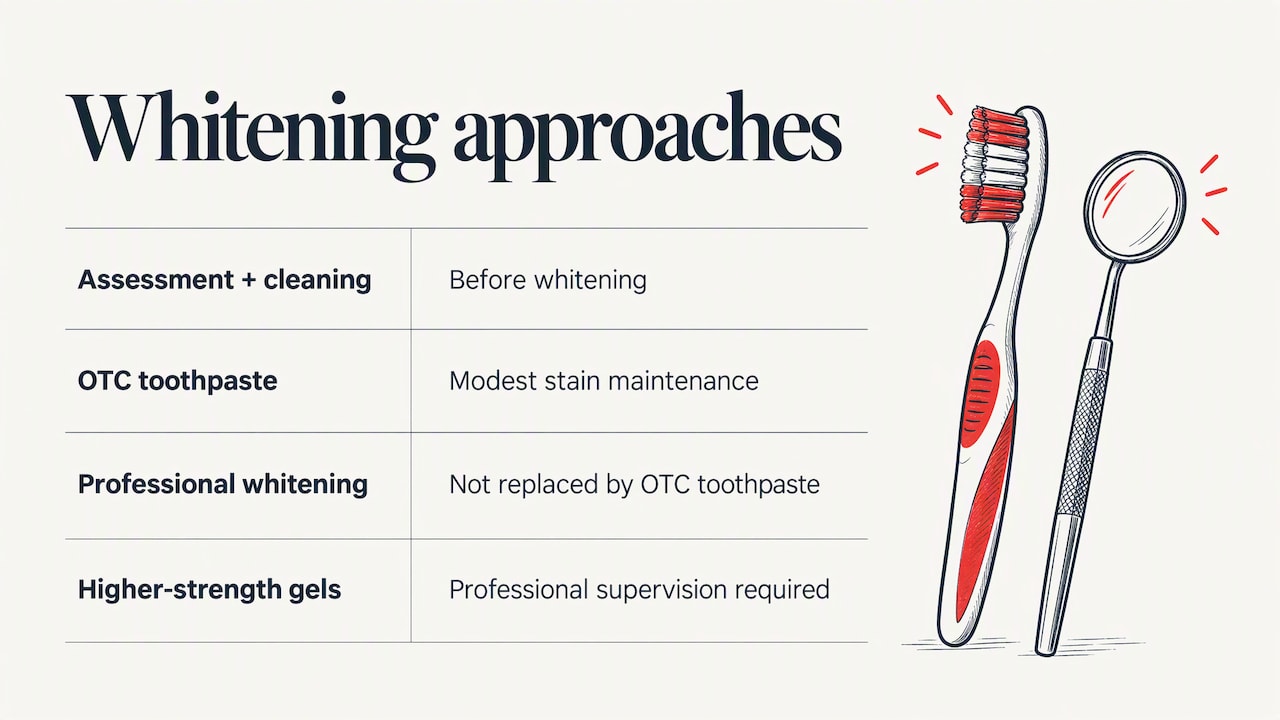
A 2025 systematic review found whitening toothpastes reduce extrinsic stain modestly compared with regular toothpaste, though study quality varies and some products carry measurable adverse effects. Australian guidance consistently backs assessment and cleaning before whitening, with higher-strength gels reserved for professional supervision. For most people, OTC toothpaste works as stain maintenance between treatments rather than a substitute for professional whitening.
Author’s practical perspective for three common scenarios
Bleeding gums and visible tartar: book a cleaning first. Healthy gums but dull colour: whitening is your answer. Unsure which applies: a quick consultation settles it faster than guessing.
— Matthew
Why choose SmileBar for professional whitening
Once your dentist has confirmed your gums are healthy and your teeth are clean, we offer two session lengths built around how much time and intensity you want. Current prices are available on our website.
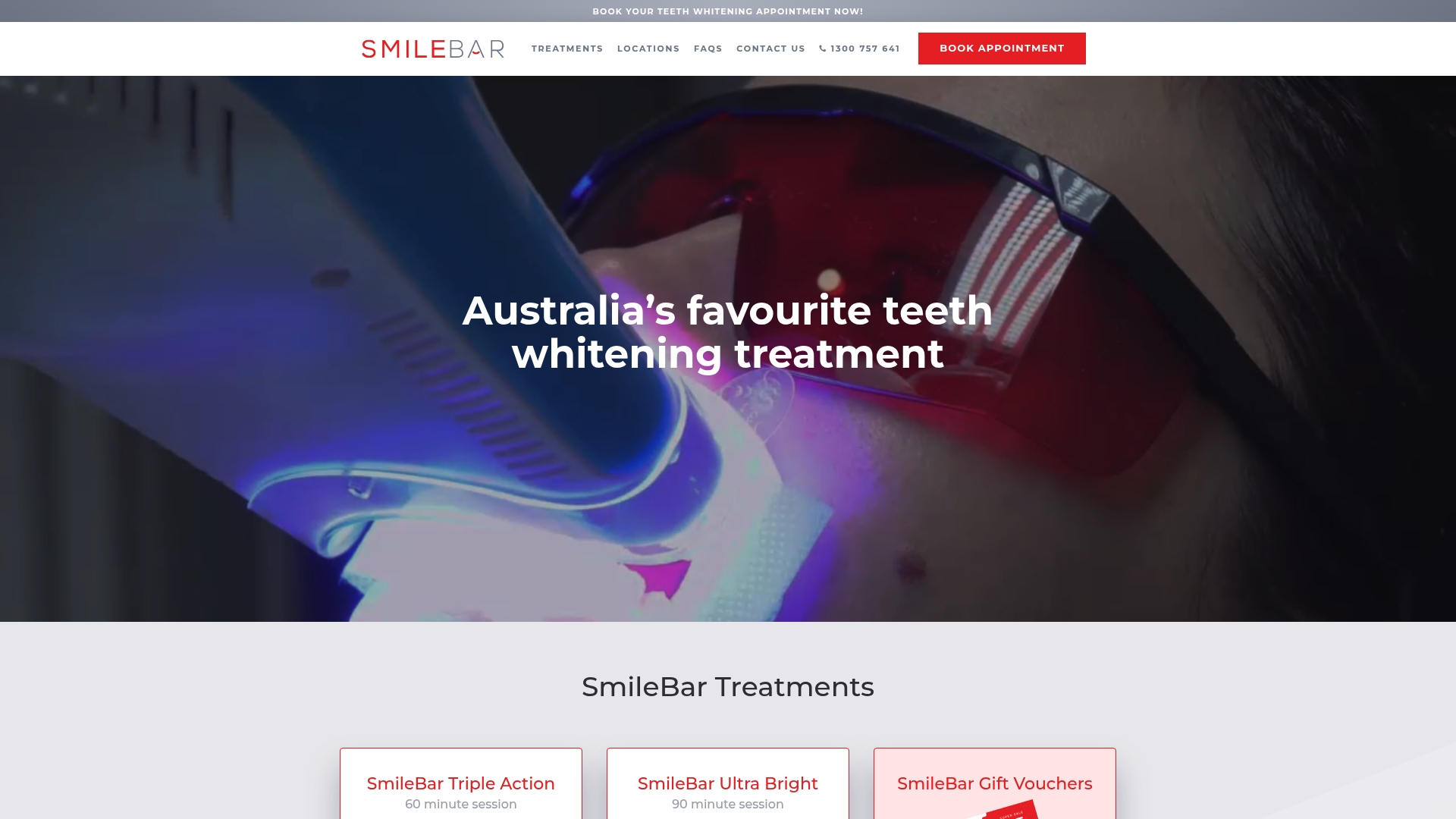
Every SmileBar visit starts with a consultation to check suitability and flag any restorations before we begin, then we manage gel strength and gum isolation throughout the session to keep sensitivity in check.
- Professional supervision at every step, from consultation to aftercare
- Sensitivity-conscious application using our highest-grade legal whitening gel
- Session length matched to your time and the shade change you want
If a specific date or event is approaching, our team can talk you through which session fits, or you can explore our treatment steps and book directly at Smilebar. Gift vouchers are also available for anyone who’d rather give the experience than book it themselves.
This article is general information, not a substitute for advice from a qualified doctor. Consult a qualified healthcare professional about your own circumstances before acting on anything here.
FAQ
Which is better, teeth whitening or cleaning?
Neither is “better”, they solve different problems: cleaning treats plaque, tartar and gum health, while whitening changes tooth colour. If you have both concerns, cleaning comes first so your dentist can see your true shade and confirm your gums are healthy enough for whitening.
What is the 2 2 2 rule for teeth?
This isn’t a term used in Australian dental guidance from Healthdirect or the American Dental Association, so there’s no single accepted definition. If you’ve seen it referenced for brushing or whitening routines, check with your dentist rather than relying on an informal rule.
Why are dentists pushing deep cleanings?
Deep cleaning, or subgingival debridement, is periodontal therapy for diagnosed gum disease, not a cosmetic upsell, according to periodontal treatment guidance. It’s recommended when there’s measurable gum pocket depth or active infection below the gum line, not for otherwise healthy mouths.
Which is better, teeth whitening or teeth polishing?
Polishing is part of a standard cleaning and removes surface stain, returning teeth to their natural shade without changing the underlying colour. Whitening uses peroxide gel to lighten the natural tooth shade itself, so the two aren’t interchangeable, polishing maintains, whitening changes.
Sources
- Teeth whitening | healthdirect
- Whitening | American Dental Association
- 2025 systematic review of whitening dentifrices
- Teeth
Recommended
- All You Should Know About Teeth Whitening Procedure
- Why Choosing A Professional Teeth Whitening Is Important
- Salon vs Dentist vs At-Home Teeth Whitening
- Teeth Whitening: Key Facts Before Treatment


