Most people do not feel lasting pain from teeth whitening, but temporary sensitivity is common. Systematic reviews of whitening studies, and professional standards such as those from the American Dental Association, describe it as short-lived and manageable. Desensitising gels and sensible protocols reduce it further, so you can plan for comfort before you start.
TL;DR:
- Sensitivity may begin during treatment or that evening and often fades within 48 to 72 hours; severe or worsening pain warrants urgent dental care.
- A review found that 25% to 35% hydrogen peroxide matched stronger concentrations in results while causing less sensitivity; longer contact can increase irritation.
- Professional potassium nitrate and fluoride gels used before or during whitening reduce sensitivity more effectively than painkillers, which provide little clinically meaningful relief.
- Dentist supplied trays keep gel off gums; over the counter strips fit less predictably, and routine light activation may increase sensitivity without improving results.
- Tell your dentist about existing cold sensitivity, receding gums, thin enamel, cracks, or exposed roots; severe pain, swelling, or burns need urgent care.
Table of Contents
- What does whitening sensitivity feel like and when does it show up?
- Why can whitening make your teeth sensitive?
- How common is sensitivity and how long does it last?
- What actually works to prevent or ease sensitivity?
- How do in-clinic, at-home and over-the-counter whitening compare for sensitivity?
- When should you see a dentist about whitening pain?
- Why a consultation matters more than the gel strength
- Whitening with minimal sensitivity at SmileBar
- FAQ
- Sources
What does whitening sensitivity feel like and when does it show up?
Whitening discomfort is rarely a constant ache. It is usually a brief reaction that comes and goes, and most people describe it as annoying rather than painful. Common sensations include:
- Sharp twinges when cold air or a cold drink touches a tooth
- A dull ache that sits in one or more teeth for a few hours
- Short spikes of sensitivity when you sip something icy or breathe in cold air
- Mild gum tenderness where the gel or tray sat close to the gumline
Timing varies by method. Some people notice a zing during treatment, others only that evening. Sensitivity often lingers for around 48–72 hours afterwards, and in many cases it settles within a few days.
The line that matters is between transient sensitivity and real pain. Brief, trigger-based twinges that fade are normal. Severe pain that keeps you awake, gets worse each day or doesn’t ease is not, and we cover that below. Our guide on what to expect before a first treatment helps you plan the days around your appointment.
Why can whitening make your teeth sensitive?
Whitening gels work by releasing peroxide, which breaks down the stain molecules inside your teeth. The same small molecules that lift stains can travel through enamel and dentine, and academic literature on bleaching sensitivity describes how peroxide can reach the pulp, the nerve tissue at the centre of the tooth. The pulp reacts to that irritation, and the result is the zing you feel with cold.
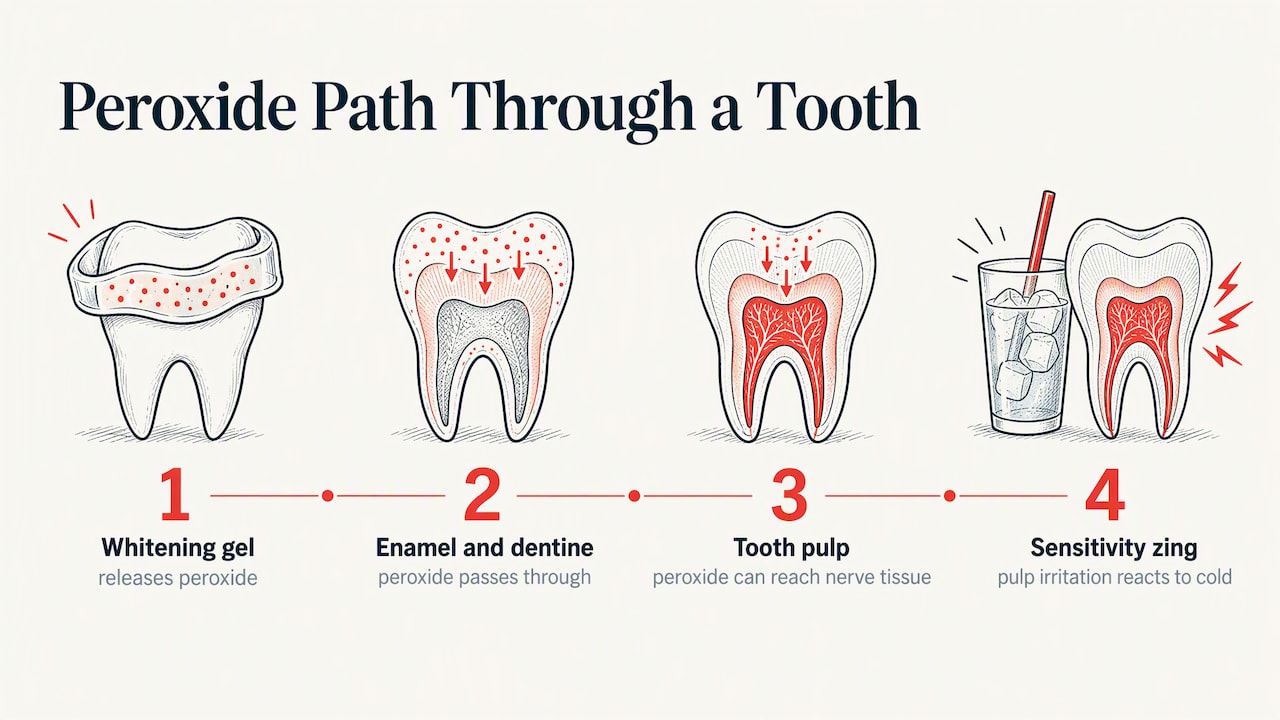
Two factors shape how strong that reaction is. The first is concentration, and the second is contact time. Professional standards from the American Dental Association tie sensitivity intensity to the strength of the bleaching agent and how long it stays on the teeth. A stronger gel left on longer is more likely to irritate.
Tooth anatomy matters too. Teeth with thin enamel, small cracks or exposed root surfaces let peroxide through more easily. If you already get twinges from cold drinks, our explainer on the common causes of tooth sensitivity shows why.
Gums are the other weak spot. If gel touches the gums, or a poorly fitted tray lets it spill, the soft tissue can turn white and sore, and in worse cases it becomes a chemical burn. Careful isolation of the gums protects you from this.
How common is sensitivity and how long does it last?
Sensitivity is one of the most reported effects of whitening, and the research reflects that. A 2026 umbrella review of systematic reviews found moderate-certainty evidence that moderate hydrogen peroxide concentrations (about 25–35%) produce results comparable to higher concentrations while causing less sensitivity.
Recovery is usually quick. With at-home trays, sensitivity may appear during treatment and typically settles over time. After in-office treatment, it may peak soon after the session and then recede.
Some people are more likely to feel it than others. Risk factors include:
- Sensitive teeth before you start
- Receding gums or exposed roots
- Thin enamel or small cracks
- Stronger gels or longer contact times
- Gel that touches the gums
Being on that list does not rule you out. It simply means your plan should include protective steps, and we cover those next. Food choices help during recovery too, which is why we put together advice on what to eat after whitening.
What actually works to prevent or ease sensitivity?
The best evidence supports desensitising agents rather than painkillers. A 2025 systematic review found that common analgesics such as paracetamol and NSAIDs give only minimal, clinically insignificant relief for post-bleaching sensitivity. Pre-emptive desensitising gels containing potassium nitrate and fluoride, applied by a dental professional, were significantly more effective.
Clinical trials of professional desensitising agents point the same way: used before or during whitening, they can reduce the risk and severity of sensitivity without affecting how white your teeth get. The umbrella review reached a matching conclusion.
Practical steps you can take:
- Ask for a professionally applied desensitising gel before or during treatment
- Use a desensitising toothpaste, including in your trays on non-bleaching days
- Space out sessions if you feel discomfort
- Choose a single-application protocol or a lower-to-moderate peroxide concentration
- Avoid very hot or very cold food and drinks if they trigger discomfort
Pro Tip: Consider using desensitising toothpaste before your appointment, not after the twinges begin.
Low-level laser therapy is a newer option. A systematic review reported that it appears to reduce tooth sensitivity after bleaching, with most included trials positive, though further research is needed to settle the best settings.
How do in-clinic, at-home and over-the-counter whitening compare for sensitivity?
Method changes both your risk and how well it is managed.
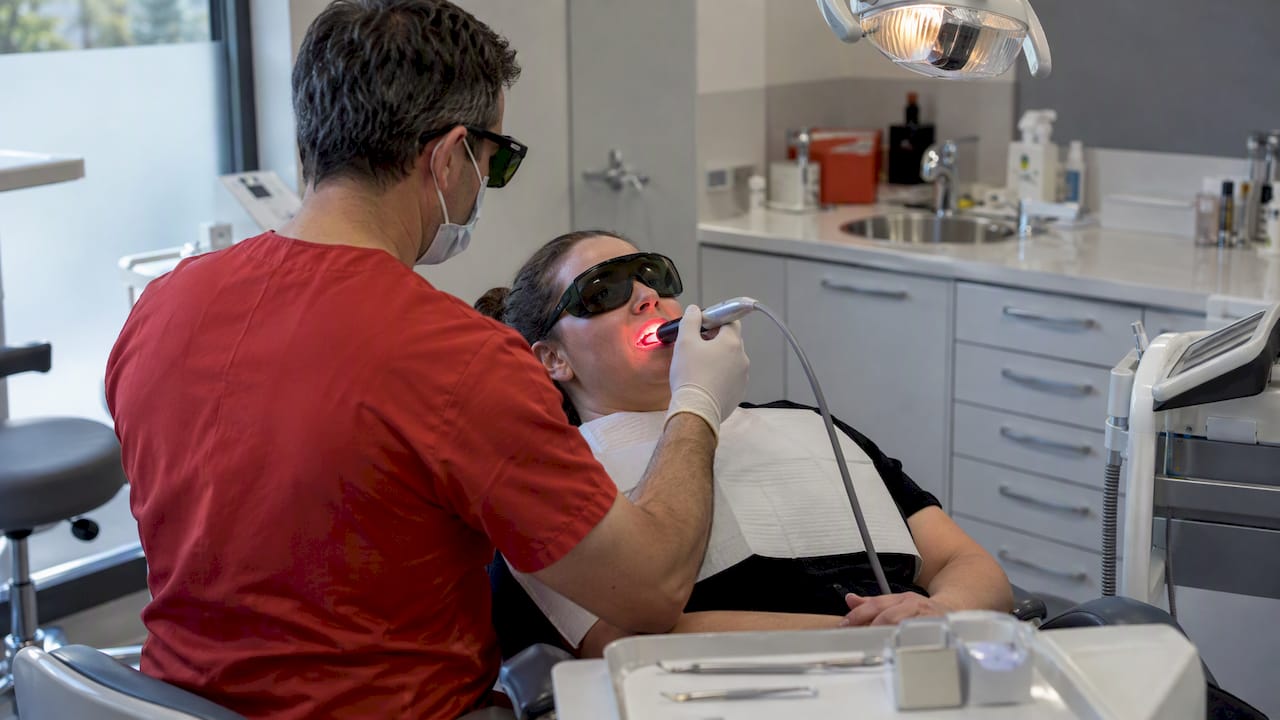
- In-clinic: Higher-strength gel under professional supervision, usually paired with desensitising measures and someone watching the whole time. Results arrive fast, and the sensitivity risk is managed for you.
- At-home dentist-supplied trays: Lower concentrations in custom trays that keep gel off your gums. Treatment is spread over days, and sensitivity often shows up in the first few days.
- Over-the-counter strips and paint-on gels: Fit and control vary a lot. Misapplication and gel on the gums can increase irritation.
- Light or laser activation: The umbrella review found that routine light activation generally does not improve whitening and may increase sensitivity. Evidence for violet light and laser add-ons is limited or mixed.
The takeaway is that stronger is not automatically better. A well-planned session with the right concentration and desensitising support can beat a rushed one with a harsher gel.
When should you see a dentist about whitening pain?
Mild, short-lived sensitivity is normal. These signs are not, and they deserve a professional look:
If you have severe or worsening pain, burned or persistently sore gums, numbness or swelling, seek immediate emergency care.
Where you have treatment matters as well. Unregulated kiosks and providers working without proper oversight raise the odds of burns and poor technique, and professional standards favour regulated dental supervision. If you’re unsure whether what you’re feeling is normal, contact a dentist rather than waiting it out at home. Our page on how to treat burned gums explains what gum irritation can look like.
For minor surface discomfort during a procedure, some people look into numbing products, and our partner’s article on safe numbing creams and studio safety covers what to watch for with topical products. Numbing gels are no substitute for fixing the cause of tooth sensitivity.
Why a consultation matters more than the gel strength
I’ve seen the same pattern again and again: people ask how strong the treatment is, when the better question is how it’s tailored to them. At SmileBar we tailor treatments to each person and focus on keeping sensitivity low. Tell us about past sensitivity, cold-drink twinges or gum recession in your consultation, because that detail changes the plan far more than the brand of gel does.
— Matthew
Whitening with minimal sensitivity at SmileBar
If comfort is your priority, our in-clinic sessions are built around it. We offer the SmileBar Triple Action 60 minute session at 199 AUD and the SmileBar Ultra Bright 90 minute session at 249 AUD, both with a consultation and measures to keep sensitivity low. You can see how each step works on our treatments page, then book a consultation when you’re ready.
This article is general information, not a substitute for advice from a qualified doctor. Consult a qualified healthcare professional about your own circumstances before acting on anything here.
FAQ
Can yellow teeth really be whitened?
Yes, in most cases. Yellow tones from food, drink and ageing usually respond well to peroxide-based whitening. Grey or brown discolouration from medication or injury can respond less predictably, so a consultation helps set expectations.
How long will my teeth hurt after whitening them?
Most sensitivity settles on its own, though how long it lasts varies. Research on at-home trays describes sensitivity that appears in the first few days and then fades. Seek immediate emergency care for severe or worsening pain.
Is it worth getting teeth whitened at the dentist or a clinic if you’re sensitive?
It can be, because professional supervision lets the concentration, timing and desensitising steps be matched to you. Our guide to whitening sensitive teeth goes into more detail.
Is there a downside to teeth whitening?
The main downsides are temporary sensitivity and gum irritation if gel touches the gums. Both are far less likely with careful application and desensitising support, and results fade over time without maintenance.
Recommended
- Teeth Whitening: Key Facts Before Treatment
- How to Treat Burned Gums From Teeth Whitening
- All You Should Know About Teeth Whitening Procedure
- Teeth Whitening Treatments for Sensitive Teeth