Whitening is the umbrella term and bleaching is one way of doing it. Whitening means making teeth look lighter by any method, including polishing away surface stain. Bleaching means using a peroxide gel to change the colour of the tooth itself. If you want a visibly whiter smile for a wedding, a job interview or a big night out, bleaching under professional control is the method that delivers it. At SmileBar, our Ultra Bright 90 minute session is $249 and our Triple Action 60 minute session is $199, both done in the chair in a single visit.
TL;DR
- “Whitening” covers every way of lightening teeth. “Bleaching” is the chemical method, using hydrogen peroxide or carbamide peroxide gel.
- Whitening toothpastes and polishing lift surface stain from coffee, tea and red wine. Peroxide bleaching goes further and lightens the tooth’s own colour.
- In Australia, gels stronger than 6% hydrogen peroxide (or 18% carbamide peroxide) are restricted to registered dental practitioners. Shop-bought kits sit below that line.
- Bleaching does not change crowns, veneers or fillings, and temporary sensitivity is the most common side effect.
- An in-chair session gives you the full result in one appointment, which suits tight schedules and fixed event dates.
Table of Contents
- Whitening and bleaching: the plain-English difference
- What each approach can and cannot do
- Methods compared
- Why strength matters, and what the law says
- Is bleaching safe?
- Who gets the most from in-chair bleaching
- How long do results last?
- What a good session looks like
- Our sessions
- Choosing between bleaching and a simple clean
- FAQ
Whitening and bleaching: the plain-English difference
People use the two words as if they were interchangeable, and in everyday conversation that is fine. The distinction matters when you are deciding what to spend money on.
Whitening is the goal: teeth that look lighter. There are two routes to it.
- Removing stain from the surface. Whitening toothpaste, a professional clean and polish, and similar abrasive approaches scrub away the coloured film that builds up on enamel. This is the mechanical route.
- Changing the colour of the tooth. This is bleaching. A peroxide gel releases oxygen molecules that break down the coloured compounds sitting in the enamel and the dentine underneath. The tooth itself ends up lighter.
Healthdirect, the federal government’s health information service, describes teeth whitening as bleaching the teeth with gels whose active ingredient is hydrogen peroxide or carbamide peroxide, and notes that a dental professional gives the safest and most effective treatment. Carbamide peroxide breaks down into hydrogen peroxide, so the two work the same way. Carbamide just releases it more slowly.
In short: every bleaching treatment is a whitening treatment, but a polish or a whitening toothpaste is not bleaching.
What each approach can and cannot do
The quickest way to choose is to ask what is causing the colour you dislike.
Surface stain (extrinsic)
Coffee, black tea, red wine, berries, curry spices and smoking leave pigment on the outer surface of enamel. A professional clean lifts a good deal of this, and whitening toothpaste can help keep it from building up. But there is a ceiling. Scrubbing only removes what sits on the surface, and it cannot make your natural tooth colour lighter.
Colour within the tooth (intrinsic)
Enamel is semi-translucent. Over the years it thins and wears, and the yellowish dentine beneath shows through more. Pigment from drinks can also work its way into the enamel. Peroxide bleaching reaches this layer, which is why it can take teeth lighter than a clean ever could.
Stains that do not respond well
Be realistic about the following, because a good consultation will raise them too:
- Crowns, veneers, fillings and other restorations do not change colour with bleaching. If you have a front-tooth filling, it will stay its current shade while the surrounding teeth lighten.
- Deep stains from certain medications in childhood, or from injury, can be slow or uneven to respond.
- A single tooth that has darkened after root canal treatment needs a different approach, called internal bleaching, rather than a regular surface session. You can read more on whitening a dead tooth.
This is why a consultation before any session is worth having. Ours is designed to tailor the treatment to your teeth rather than apply one approach to everyone.
Methods compared
| Method | How it works | Typical effort | Best for |
|---|---|---|---|
| Whitening toothpaste | Mild abrasives and low-level agents lift surface stain | Daily brushing, gradual | Keeping surface stain down between treatments |
| Clean and polish | Professional removal of plaque, tartar and surface stain | One short visit | Resetting teeth before whitening |
| Supermarket and chemist kits | Low-strength peroxide strips, gels or trays | Days to weeks | Mild, slow lightening |
| Take-home trays | Custom trays with gel, worn for a few hours or overnight | One to two weeks | People who prefer to go slowly |
| In-chair bleaching | Strong peroxide gel applied and managed by a professional | 60 to 90 minutes, one visit | Fast, noticeable change to a deadline |
Better Health Channel, the Victorian Government’s health site, notes that in-clinic whitening uses a high-concentration gel applied for about an hour, whereas at-home systems take one to two weeks. It also says supermarket and chemist products use a similar ingredient but in only small amounts, so they are not as effective.
If you want a fuller breakdown of where the options differ, we have a guide to salon, dentist and at-home whitening.
Why strength matters, and what the law says
Gel strength is the single biggest reason an in-chair session works faster than a home kit. In Australia, the Poisons Standard sets the line: products containing more than 6% hydrogen peroxide, or more than 18% carbamide peroxide, can be used or supplied only by registered dental practitioners as part of dental practice. Products at or below that level can be sold to consumers with safety warnings.
That is why a box from the shelf and a professional session are different things, even when the active ingredient has the same name. The professional session uses the highest strength the law allows, and the contact time is controlled so the result arrives in one visit.
The Australian Dental Association’s position is that only registered dental practitioners should work above that strength, because they can assess whether it suits an individual patient. Whenever you book any whitening above shop strength, ask who will be applying the gel and what their registration is. It is a reasonable question and a good clinic expects it.
Advertising rules also apply. Australian cosmetic procedure guidelines issued in 2025 say whitening advertising must not overstate results or imply unrealistic outcomes. That is a good principle for readers too: expect an honest shade range, not a promise of perfect white.

Is bleaching safe?
For most healthy adults, professionally supervised bleaching is a routine cosmetic treatment. The most common effects are temporary and mild:
- Sensitivity. Teeth can feel sharp to cold air or drinks for a day or two. Healthdirect advises seeing a dental professional if irritation lasts more than one to two days.
- Gum irritation. Gel that touches the gums can cause temporary soreness or whitening of the gum surface. Careful isolation of the gums during the session is part of doing it properly.
- Swallowed gel. This can cause nausea or stomach irritation, which is another reason strong gels belong in a controlled setting.
Who should wait or get dental advice first:
- People who are pregnant or breastfeeding. Our page on pregnancy teeth whitening explains why waiting is the sensible option.
- People under 18.
- Anyone with gum disease, cracked teeth, holes or untreated decay. See your dentist first so these are treated before whitening.
- People with naturally sensitive teeth. Sensitivity does not always rule out whitening, and we explain the options in our guide to whitening sensitive teeth.
Sensitivity is the thing our service pays most attention to. Our approach to in-chair whitening is built around keeping it to a minimum while still using the highest-grade gel the law permits.
Who gets the most from in-chair bleaching
The people who book with us tend to fall into a few groups, and bleaching suits each for a different reason.
Busy professionals
A take-home kit asks for daily effort over one to two weeks, and it is easy to let that slide. A single appointment fits into a lunch break or a Saturday morning. Our Triple Action session runs 60 minutes and our Ultra Bright session 90 minutes. Our same day teeth whitening page walks through what happens from the moment you arrive.
Anyone with a date in the diary
Weddings, graduations, photo shoots, job interviews and milestone birthdays all come with a fixed date. The sensible timing is to book a few days before the event rather than the morning of it. That leaves a little time for any short-lived sensitivity to settle and for the shade to stabilise.
Choice, the consumer organisation, reports that light or heat can appear to add a whitening effect, but some of that is the tooth drying out and the shade softening slightly as it rehydrates. That is another good reason to leave a buffer before photos rather than treating the day itself as the finish line.
Coffee, tea and red wine drinkers
These drinks are the classic culprits for surface staining. If you have a daily coffee habit, there are two useful steps: a session to reset your shade, then a routine that slows the return of stain. Rinsing with water after coffee or wine, drinking dark drinks through a straw where practical, and brushing twice a day all help. Our guide to teeth whitening maintenance gives the full routine.
Couples and gift-givers
A whitening session is a gift that the other person actually notices, and it suits birthdays, anniversaries and the lead-up to a wedding. Gift vouchers let the recipient choose their own time, which matters because the best timing depends on their calendar and any dental work they need first.
How long do results last?
No whitening is permanent. SA Dental says the effects usually last six to twelve months, depending on brushing and diet. Better Health Channel adds the habits that help results last: brushing twice daily, flossing daily, not smoking, limiting strongly coloured foods and drinks, and visiting the dentist every six to twelve months.
So a person who drinks three flat whites a day and enjoys a glass of red most evenings should expect to drift back faster than someone who drinks mostly water. That is not a flaw in the treatment. It is simply how pigment behaves.
How often to top up is a common follow-up question. Our guide on how often to whiten teeth covers sensible spacing so you can keep a bright result without overdoing it. Excessive, prolonged use of strong gels can wear on enamel, so more is not better.
What a good session looks like
Whether you choose 60 or 90 minutes, here is what a well-run in-chair bleaching appointment includes, and where it can go wrong when it is rushed.
- Consultation. The practitioner checks your teeth, asks about sensitivity and previous dental work, and agrees a realistic target shade. Skipping this is how people end up surprised by an uneven result around fillings or crowns.
- Protecting the gums and lips. Soft tissue is shielded so strong gel stays on the teeth. Poor isolation is the main cause of gum irritation.
- Gel application. The gel is applied in timed rounds with advanced whitening equipment. Contact time is the lever that controls both the result and the sensitivity.
- Rinse and check. The gel is removed, your teeth are rinsed and your new shade is compared with where you started.
- After-care. You are given instructions for the first day or two. Colourful food and drink are the main things to avoid, because freshly treated teeth are at their most receptive to stain.
You can see our process laid out on the treatment steps page.
Our sessions
SmileBar has performed over 10,000 whitening procedures since 2011. Our professional sessions use the highest-grade whitening gel allowed by Australian law, along with advanced equipment, and the experience is designed to keep sensitivity to a minimum.
The Triple Action 60 minute session is $199 and the Ultra Bright 90 minute session is $249. Both are one-off prices. Ultra Bright is our intensive option for the whitest, yet still natural-looking, result.
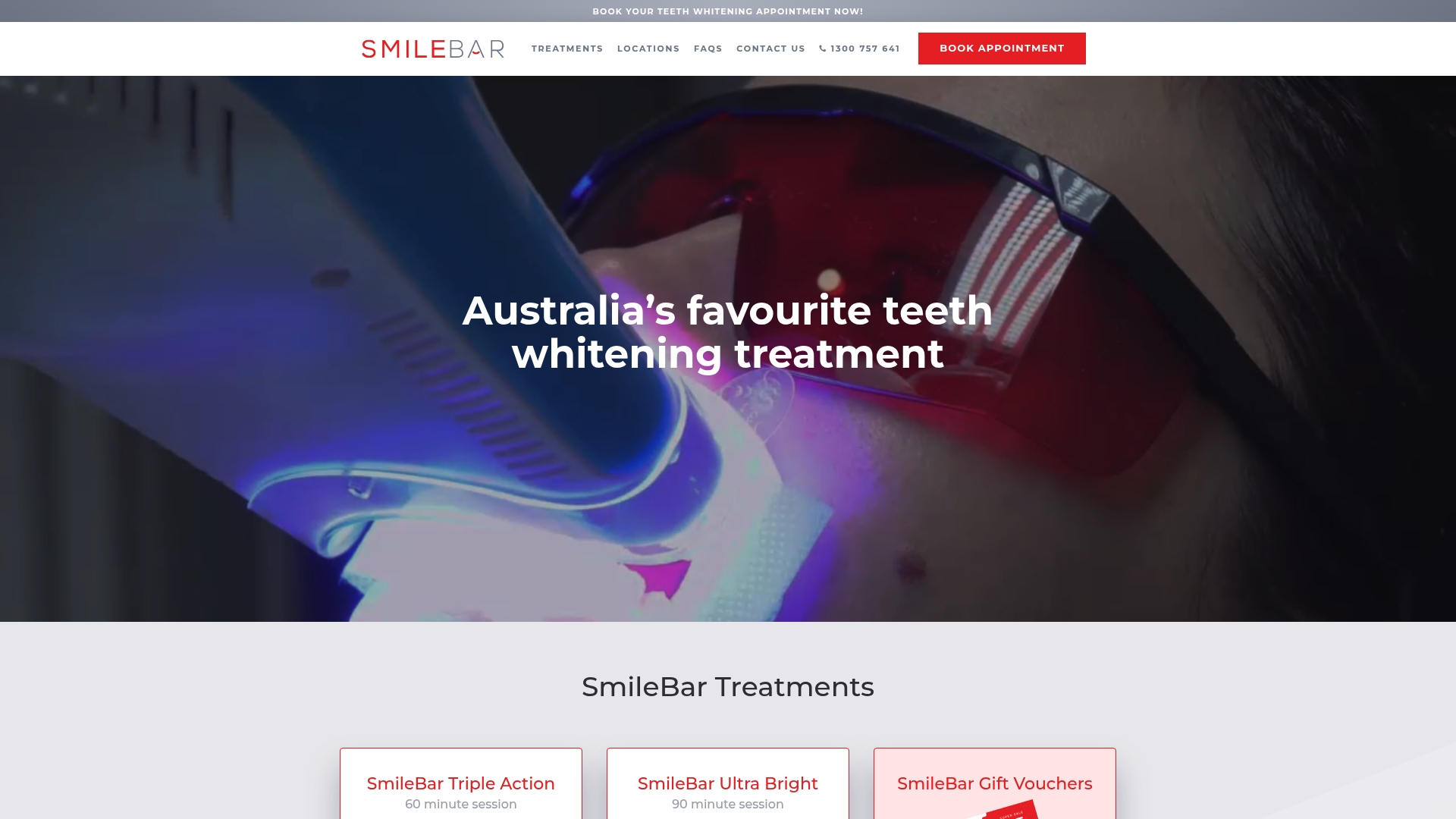
You can see all session options and book on the SmileBar homepage. If you are buying for someone else, gift vouchers are available from the same page. We have clinics in major cities, including Melbourne, Perth, Cairns, Townsville, Broadbeach, Maroochydore, Noosa and Goodwood in Adelaide. If you want to compare pricing in detail first, our teeth whitening costs in Australia page lays it out.
Choosing between bleaching and a simple clean
Here is a quick way to decide.
- Your teeth look dull but not yellow, and you have not had a clean in a year. Start with a professional clean, then consider bleaching if you want to go lighter.
- You want a noticeably lighter shade and have a date coming up. An in-chair bleaching session is the direct route.
- You have a single dark tooth. That is a different issue, often related to a past injury or root canal, and it needs targeted treatment.
- You have crowns, veneers or large fillings at the front. Bleaching will lighten the natural teeth around them but not the restorations, so talk through the likely match during your consultation.
- You have gum problems, cracks or untreated decay. See your dentist first.
FAQ
Is bleaching stronger than whitening?
Bleaching is a type of whitening, and it is the stronger type because it changes the colour of the tooth rather than just removing surface stain. The strength of the gel, the contact time and the way it is applied all affect how much lighter your teeth become.
Is it safe to have your teeth bleached?
For healthy adults, professionally applied bleaching is a well-established cosmetic treatment, and temporary sensitivity is the most common effect. It is not recommended if you are pregnant or breastfeeding, under 18, or have gum disease, cracked teeth or untreated decay. Speak to your dentist first if any of those apply.
Can yellow teeth really be whitened?
Yellowing that comes from age, coffee, tea or red wine usually responds well to bleaching. Restorations such as crowns, veneers and fillings do not change colour, and a single tooth darkened after root canal treatment needs internal bleaching instead.
How long does a whitening result last?
Results usually last around six to twelve months, depending on how much you brush and how often you drink coffee, tea or red wine. Good daily habits and a top-up when you notice the shade drifting will keep your smile brighter for longer.
Recommended
- All You Should Know About Teeth Whitening Procedure
- Teeth Cleaning vs Whitening: Clean First, Then Compare 3 Options
- Are Teeth Whitening Strips Safe? Find Out Here
- Salon vs Dentist vs At-Home Teeth Whitening